
Our Blog: Check by often for updates*.
Tackling the City by the Horns.
There is a version of Singapore that no longer exists—one you will not find in glossy brochures or MRT maps. It is a Singapore of hooves on gravel, of lowing cattle at dawn, of buffalo carts creaking through muddy streets. Before the island became a city of glass and algorithms, it was, quite literally, powered by animals.
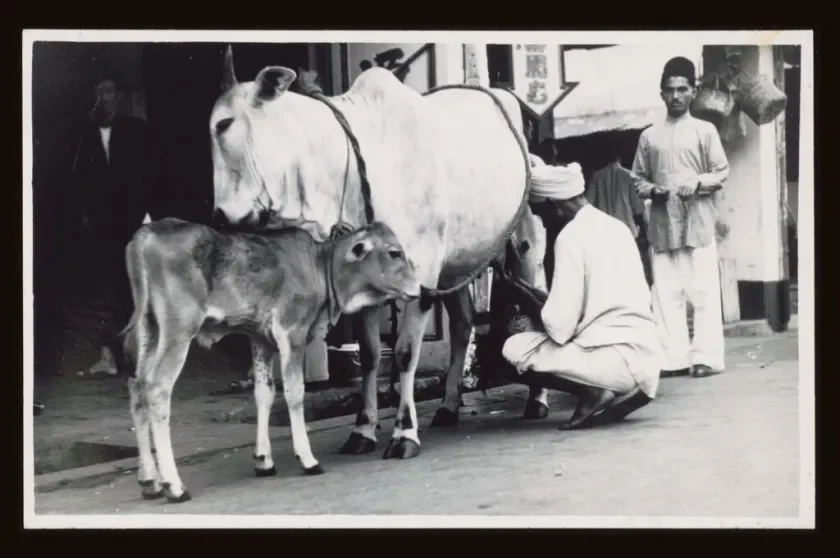
Milkman milking the cows at people’s doorstep.
To understand that forgotten Singapore is to understand cattle—not as a side story, but as a central force in how the island moved, ate, traded, and lived.
The City That Moved on Hooves
In the early 19th century, long before cars and buses, Singapore ran on muscle—human and animal. Among the most important of these were bullocks and buffaloes. The humble bullock cart was not a quaint relic; it was infrastructure.
As the National Library Board notes, bullock carts were “primary forms of transportation” alongside trams and rickshaws, moving goods across the port and construction sites and sustaining the young colony’s economy.
They hauled bricks to build the city. They transported cargo at Boat Quay. They even flattened the Padang’s grass and mowed lawns at the racecourse.
But perhaps their most intimate role was in domestic life.
Before piped water, there was the daily ritual of water collection. And this is where cattle quite literally gave Singapore one of its most iconic place names.
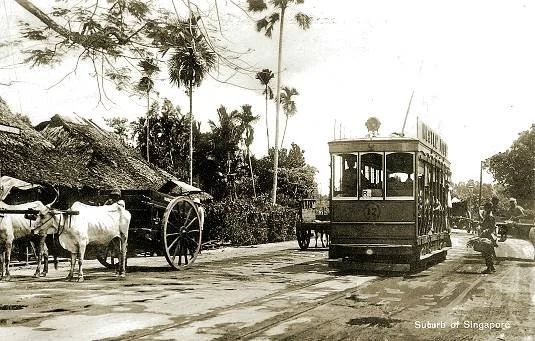
A bullock cart with the Singapore electric tram
Kreta Ayer: A Name Written in Water and Animal Labour
The name Kreta Ayer—today synonymous with Chinatown—translates to “water cart.” But that translation misses the texture of the past.
These were not abstract carts. They were bullock carts, creaking under the weight of water barrels, making their slow way from wells near Ann Siang Hill into the dense Chinese settlement.
Some have wondered why unlike almost any Chinatown anywhere which is usually called Tángrénjiē or “Tang People Street“ - In Singapore Chinatown in the Chinese dialects is refred to as Niu Che Shui—“bullock water-cart.”
This was not poetic naming. It was literal.
Every drop of water consumed in early Chinatown was hauled by cattle. The carts did more than transport water—they shaped the rhythms of life. For more than a century growing up in most parts of Singapore, the sound of wheels and hooves was as constant as the clatter of chopsticks.
Even the dust of the streets bore their imprint. As the carts passed, water spilled and dampened the roads, keeping down dust in an otherwise dry and congested district.
In this way, cattle did not just sustain the city—they softened it.
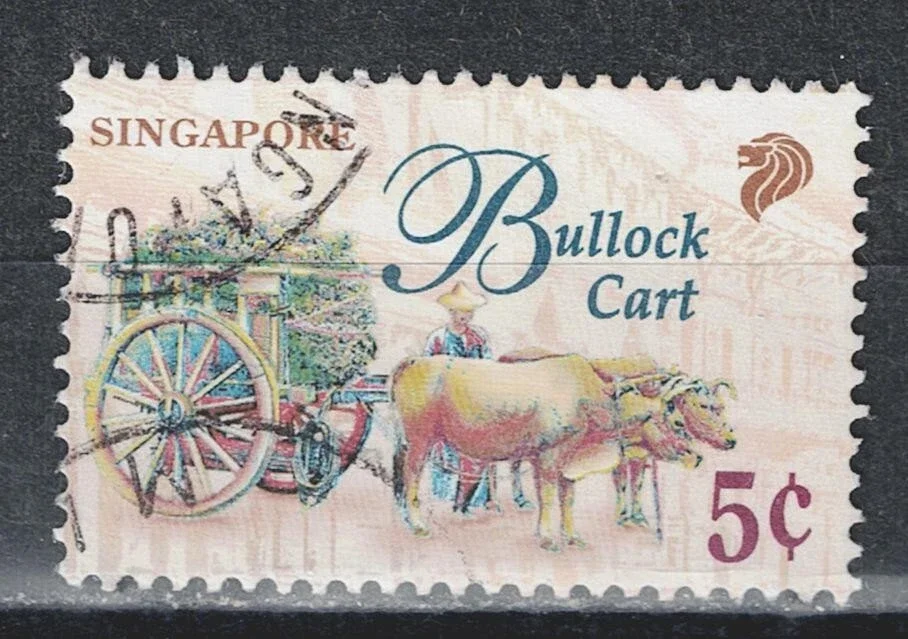
A celebration of cattle in our stamps
Milk, Meat, and the Everyday Economy
Cattle were not just engines of movement. They were also sources of nourishment.
As early as 1831, cattle and beef were being imported into Singapore, feeding a growing, multicultural population.
Beef entered local cuisines—from Hainanese beef noodles to Malay rendang—embedding itself into the culinary DNA of the island.
But beyond beef, there was milk.
Across colonial Singapore, cows, goats, and buffaloes supplied fresh milk in an era before refrigeration. Milk sellers—often from Indian communities—delivered it door-to-door, sometimes directly from animal to customer. It was an economy built on proximity and trust.
Certain streets in Chinatown (Cross Street for example) even became associated with dairy distribution, informally earning reputations as “milk streets,” where cattle were kept or milk was traded. These were spaces where agriculture and urban life overlapped in ways that feel almost unimaginable today.
Little India and the World of Cattle
If Chinatown’s identity was shaped by water carts, then Little India was shaped by cattle themselves.
The very name Kerbau Road—kerbau meaning “buffalo” in Malay—tells a story.
This area, around present-day Tekka, was once the centre of Singapore’s cattle trade. Buffaloes were kept, traded, and slaughtered here. The landscape would have been filled with the smell of hay and livestock, a far cry from today’s vibrant retail streets.
A statue near Buffalo Road today commemorates this past—a turbaned driver guiding his bullock cart, a frozen echo of a vanished world.
By the early 20th century, the cattle trade here had grown significant enough to produce figures like Moona Kader Sultan, known as the “Cattle King,” who dominated livestock imports and who ““bought, bullied and buried rivals to his Straits Cattle Trading Company” and created his fortune from the trade. But that’s another whole Blog Post!
The point is that cattle were not peripheral. They were big business. They were [art of the living breathing history of the city.
The Dhobis and the Ecology of Labour
Another community deeply intertwined with cattle were the dhobis—the traditional washermen of colonial Singapore.
While not always directly using cattle, their work existed within the same ecological system of labour that cattle enabled. Water transported by bullock carts fed washing areas. Buffaloes and oxen sometimes helped in hauling heavy loads of laundry or equipment.
The dhoby grounds—open fields where clothes were washed and dried—depended on a steady water supply. So did the buffalos and the cows. And they both - such as on the banks of the Sungei Rochor at what is now Little India shared the water and the space. Without the cattle-driven water economy, such labour would have been far more difficult.
In this way, cattle quietly underpinned entire professions.
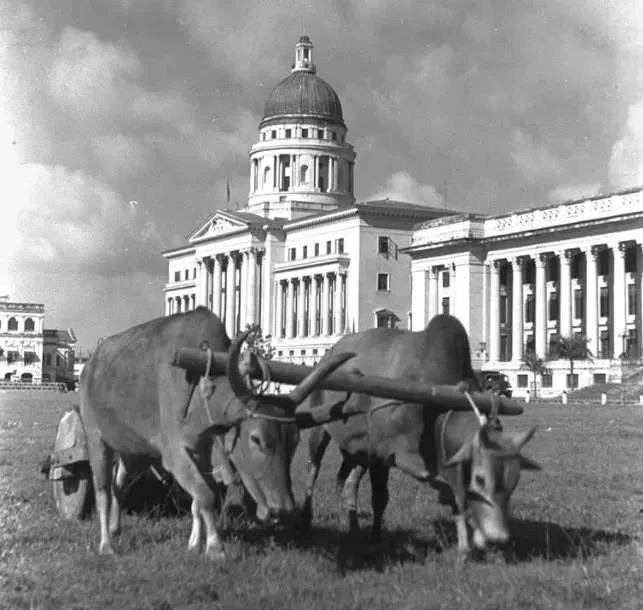
Bullocks grazing on the Padang.
A Multispecies City
What emerges from these fragments is a portrait of Singapore as a multispecies city.
Cattle ploughed through mud and dust. Goats bleated in back alleys. Buffaloes stood tethered in what are now prime urban districts. Chickens roamed the roads. Horse carriages clattered their way through the streets. Pigs oinked their way through the lanes of Punggol and Choa Chu Kang. The boundaries between rural and urban were porous.
Even the social fabric reflected this. Bullock cart drivers were often Indian migrants. Chinese residents relied on their services. Malay terms like kereta air became embedded in everyday speech.
The city was not just multicultural—it was interdependent across species and communities.
The Beginning of the End
But this world was already beginning to disappear by the early 20th century.
Motor vehicles arrived. Roads improved. Urban planning became more rigid. The slow, organic rhythms of animal-powered transport began to give way to speed and efficiency.
The demand for bullock carts declined steadily, and by the mid-20th century, they had “virtually disappeared.”
Yet, even as they faded, cattle remained present—sometimes uncomfortably so.
Lee Kuan Yew and the Problem of Cattle
By the 1950s and 60s, Singapore was in transition—from colony to modern nation.
And in that transition, free-roaming cattle became a problem.
They wandered onto roads, caused traffic disruptions, and posed safety risks in an increasingly motorised city. They were remnants of an older Singapore that no longer fit the vision of a modern, efficient state.
Lee Kuan Yew understood this tension intimately.
He was not indifferent to cattle. In fact, accounts suggest he had a personal familiarity with them, having grown up in a Singapore where they were part of everyday life. But as Prime Minister, he prioritised order, safety, and modernisation.
It is said anecdotally that the last straw - or blade of grass anyway - was when LKY was looking out of his office in the Old Parliament House and saw a bunch of cows feeding at the Padang. In his memoirs he writes, “One morning in November 1964 I looked across the Padang from my office window at City Hall to see several cows grazing on the Esplanade! A few days later a lawyer driving on a main road just outside the city hit a cow and died.”
The solution was decisive and very typical - free-roaming cattle were banned. I quote LKY again, "We gave owners of cows and goats a grace period until 31 January 1965 after which all such stray animals would be taken to the abattoir and the meat given to welfare homes. By December 1965 we had seized and slaughtered 53 cows. Very quickly, all cattle and goats were back in their sheds" .
”This was not just a regulatory change. It was symbolic.
It marked the end of a way of life.
The kampong, with its animals and informal systems, gave way to the planned city. The unpredictability of cattle on roads was replaced by the precision of traffic lights and expressways.
In Lee’s Singapore, just as poetry was an unaffordable luxury, there was apparently no room for wandering cows.
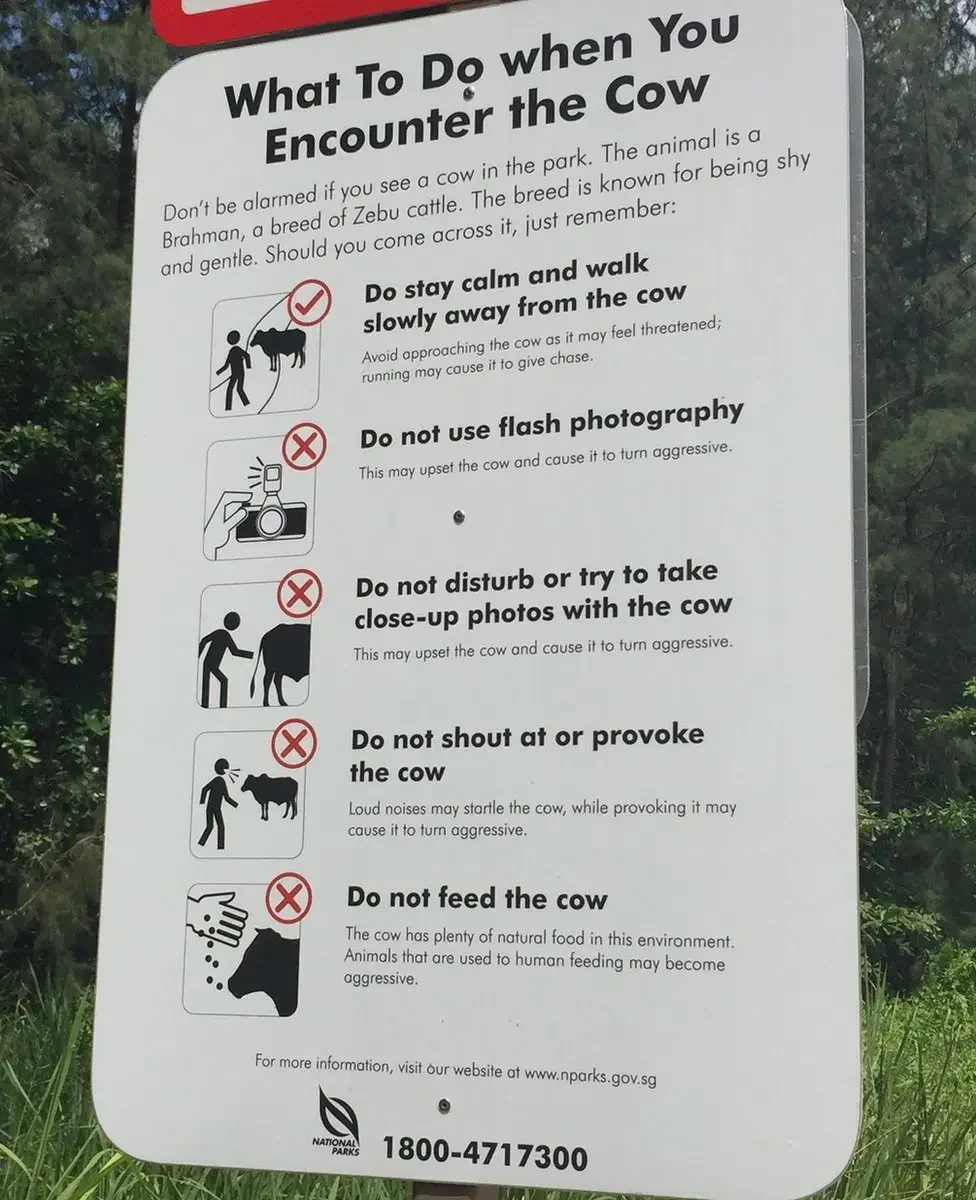
But it is interesting that as was widely reported including in the BBC, the last free roaming cow dies in Coney Island in 2016. It was a stray with no one aware on how he ended up there. But pass away from old age he did, not walking after a routine examination. There even was a sign on the island to tell people how to act when they saw the cow!
What We Lost (and What We Gained)
It is easy to romanticise this past—to imagine a gentler, slower Singapore.
But that would be incomplete.
The cattle economy was also one of hardship. Bullock cart drivers endured long hours and physical strain. Urban sanitation was poor. Overcrowding and disease were real problems in districts like Kreta Ayer.
Modernisation brought undeniable benefits: clean water, efficient transport, safer streets.
And yet, something intangible was lost.
The presence of animals in daily life created a different relationship with the city—one that was tactile, immediate, and grounded in the rhythms of nature.
Today, cattle survive in Singapore mostly as memory: in street names like Kerbau Road, in statues, in the etymology of Kreta Ayer.
They are ghosts embedded in the urban landscape.
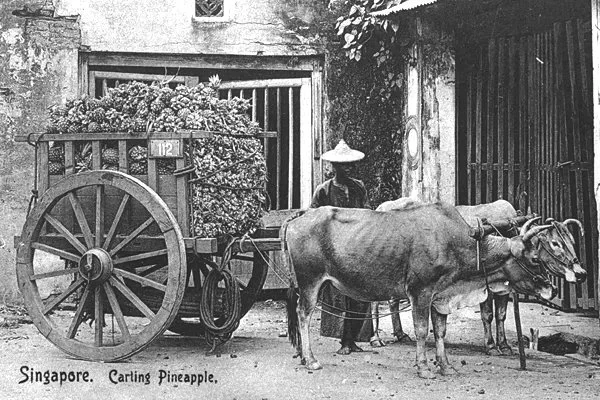
A Bullock Cart laden with Pineapples.
Reading the City Differently
Walk through Chinatown today and you will see shophouses, curated heritage trails, and tourists photographing lanterns.
But if you look closely—if you read the names, trace the histories—you might hear something else.
The creak of wooden wheels.
The low grunt of a bullock.
The splash of water on dry earth.
Singapore did not simply rise from the sea into modernity. It was carried there—slowly, stubbornly—on the backs of animals.
And in remembering cattle, we remember a different kind of city. One that was messier, yes. But also more alive.
Why every Singaporean should know the name “Bukit Chandu”.
February 14, 1942. Valentine's Day. While the rest of the world exchanged cards and chocolates, a ridge on the western edge of Singapore Island was witness to an act of almost foolhardy heroism. We know it as the The Battle of Pasir Panjang: This is that story.
Stand at Kent Ridge Park on a humid afternoon and you will hear birds, the distant hum of traffic, maybe the wind dragging itself lazily across the ridge. But in February 1942, this same stretch of ground—then known as Pasir Panjang Ridge—was one of the last places in Singapore where men chose, quite consciously, to die where they stood.
This is the story of the Battle of Pasir Panjang—a battle that, in purely military terms, changed nothing… and yet, in human terms, changed everything.
Let me take you back to the day.
The oil was burning. From the Normanton Oil Depot, great rivers of flame were flowing into the wide drain that ran behind "C" Company's position on Pasir Panjang Ridge. The sky was black with smoke. Japanese artillery had been pounding the ridge since dawn with such ferocity that, according to survivors recorded in Dol Ramli's History of the Malay Regiment 1933–1942 (published in the Journal of the Malaysian Branch of the Royal Asiatic Society, 1965), the mortar barrage was "so thick and fast" it felt "more like heavy machine-gun fire than mortar shelling." And yet, on that hill — that small, scrubby, oil-choked ridge overlooking what is today the Pasir Panjang area of Singapore — fewer than a hundred soldiers refused to move.
They were men of the 1st Battalion, Malay Regiment. And what they did in those two days would become one of the most extraordinary acts of military courage in Singapore's history — and one of its least told stories.
A Regiment Born From Doubt
To understand what happened on that ridge, you first need to understand the extraordinary improbability of the regiment that held it.
The Malay Regiment almost didn't exist. For decades, British colonial administrators resisted the idea of arming local Malays. The reasons were a mix of racial paternalism, colonial anxiety, and institutional inertia. As Dol Ramli documents extensively, there were fears that "the Malay, with his leisurely temperament and lack of military traditions other than those of guerilla warfare, would rebel against the discipline of the parade ground and the barrack-room." Some British officials doubted whether Malays could make effective regular soldiers at all.
These doubts lingered in the corridors of the Federal Council from as early as 1913, when the idea of a Malay Regiment was first formally raised. World War I shelved it. The Great Depression nearly killed it again. It was only in 1932 — driven partly by economics (the Indian Burma Rifles were costing the Federated Malay States a fortune) and partly by growing political pressure from Malay rulers — that the Colonial and War Offices finally approved the regiment "in principle."
On March 1, 1933, the experiment began. Twenty-five men, handpicked from over a thousand applicants, assembled at Port Dickson under the command of Major G. McI. S. Bruce of the Lincolnshire Regiment. They trained in four sleeping huts called the Haig Lines, on a patch of land near the sea, five miles from Port Dickson town. They were watched with scepticism. They were given three years of short-service engagements — an implicit hedge against failure.
They were magnificent.
By mid-1933, their commanding officer was writing that recruits were "good material and keen." Their drill, witnessed by Singapore's High Commissioner Sir Shenton Thomas on July 18, 1933, was described as being executed "with admirable precision." Bruce Lockhart, the diplomat and author, watched a Sunday parade at Port Dickson and wrote in Return to Malaya (1936) that these men had "the swagger of guardsmen" — and he had seen the ceremonial guards of most of the crack regiments of Europe.
The regiment grew. A regimental mosque was built. A school opened for soldiers' children. A badge was designed — two tigers supporting an oriental crown, enclosing a kris and scabbard, bearing the motto Ta'at Setia: Loyal and True. The colours chosen were green for Islam, yellow for Malay royalty, and red for the British Army. It was, from its first years, an institution woven from pride.
And then, one week after the 2nd Battalion was officially formed on December 1, 1941, the Japanese struck.
The World Was Falling
The speed of the Japanese advance down the Malay Peninsula in December 1941 and January 1942 was, by any historical measure, astonishing. Lieutenant-General Tomoyuki Yamashita, who had personally consulted with Hitler's military advisers in Germany, commanded elite troops battle-hardened in China. As Ramli records, they moved south "at the rate of some ten miles a day." Within sixty-two hours of the outbreak of hostilities, they had established air superiority over North Malaya.
The Malay Regiment's companies were scattered across this collapsing theatre. "A" Company of the 2nd Battalion fought rearguard actions in Kelantan. "D" Company of the 2nd Battalion moved with the haggard retreat down the West Coast, eventually surviving a desperate miniature-Dunkirk evacuation from the beaches near Ponggor — surviving on coconuts and bananas, moving at night to evade Japanese air detection. Their rescue, led by Lt. Mohd. Ali who paddled disguised as a fisherman through coastal waters and nearly got shot by his own side's coastal battery, reads almost like fiction.
But by early February 1942, the mainland was lost. The Causeway had been blown. Singapore island was the last card.
The 1st Battalion, Malay Regiment — roughly 750 men — was part of the 1st Malaya Infantry Brigade and was deployed along the western coast of the island, concentrated on beach defence in "W" Sector. The 2nd Battalion, still absorbing raw recruits in roughly a 1-to-3 ratio (one recruit to every three trained soldiers, according to Ramli), held positions along the Jurong River line as mobile reserves.
The Ridge
February 12, 1942. The Japanese 18th Division, under Mutaguchi, was pushing east. The Pasir Panjang Ridge was a low hill feature running along what is today the area between West Coast Road and Pasir Panjang Road — a feature that commanded the approaches to the Alexandra area, with its ammunition depot, military hospital, and the Keppel Harbour approaches.
"C" Company of the 1st Battalion was given the ridge to hold.
Their company commander was Captain H.R. Rix, formerly of the Perak Battalion of the FMS Volunteer Force. A Cambridge educated lawyer, like Lee Kuan Yew a few years later. According to multiple survivor testimonies cited by Ramli, Rix "maintained close personal contact with the units of his company and showed a disregard of danger which inspired his men to equal efforts." His orders were clear and unambiguous: the position would be defended to the last man and the last round.
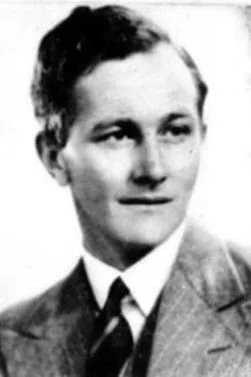
Capt Harry Rodway Rix
Captain in the Malay Regiment. Company Commander “C” Company. Cambridge educated Lawyer, Barrister at Law, (Gray’s Inn). Died at Bukit Chandu on 14th Feb 1942
February 13 brought a crescendo. Artillery and mortar fire "straddled" the Malay Regiment positions. At least five officers were killed and seven more wounded before the main Japanese offensive even began. Both battalion headquarters received direct hits. The Gap House — 1st Battalion HQ — became "a total wreck." Communication lines were shattered. And then, on the afternoon of the 13th, the Japanese tried something that speaks volumes about their desperation to take the ridge quickly: they sent men dressed as Punjabi troops marching in column of four down the road toward the Malay Regiment positions.
It was 2nd Lieutenant Abbas bin Abdul Manan who spotted the deception. The Japanese marched in fours — the British Army marched in threes. Long bursts of Lewis gun fire at close range "left about 22 Japanese lying on the ground dead or wounded," and the rest fled, according to Abbas's written statement recorded in Ramli's history.
The ruse had failed. The Japanese renewed the attack in overwhelming strength.
But clarity buys you only moments in war.
The Japanese came again. This time in overwhelming force—thousands of men, supported by artillery and tanks. The defenders were hammered relentlessly. Guns overheated. Ammunition dwindled. Men fell. And still—they held.
For nearly 48 hours, the Malay Regiment and their allies fought along the ridge, refusing to yield ground even as their numbers were cut down .
This is the part history often compresses into a sentence.But imagine it stretched out:
The heat. The noise. The screaming of shells through the air, the ear-shattering blasts, the staccato machine guns, the aircraft overhead swooping down to strafe the ridge, the smell of blood and burning flesh, the exortations of the comrades and the fierce Japanese calls of tennōheika banzai - Long Live the Emperor. The smell of cordite and earth. The knowledge that behind them lay a wall of fire and a 20 foot ditch. And finally, the realisation that there would be no reinforcement coming. Just endurance.
When Ammunition Ran Out
Eventually, the inevitable happened. The ammunition ran dry. There is a moment in battle where the logic of survival breaks. Where the question shifts from Can we win? to something quieter and more dangerous:
How do we want to be remembered?
At Pasir Panjang, the answer was clear. They fixed bayonets. And when even that failed—they fought with fists. Hand-to-hand combat broke out along the ridge. The fighting became intimate, brutal, almost primal. There are accounts of soldiers grappling, stabbing, striking—fighting not for victory, but for refusal.
Refusal to surrender.
Adnan
In the final assault on February 14, almost every officer of "C" Company was killed. Captain Harry Rix died giving orders that the position should be held to the last round. Lieutenant Stephen led a bayonet charge and was shot before he could reach the enemy. Lieutenant Adnan bin Saidi — commander of No. 7 Platoon, a young Perak-born officer from the regiment's founding cohort — manned a Lewis gun himself and "exposed himself frequently in order to encourage his men," according to the account in The Malay Regiment 1933–1947.
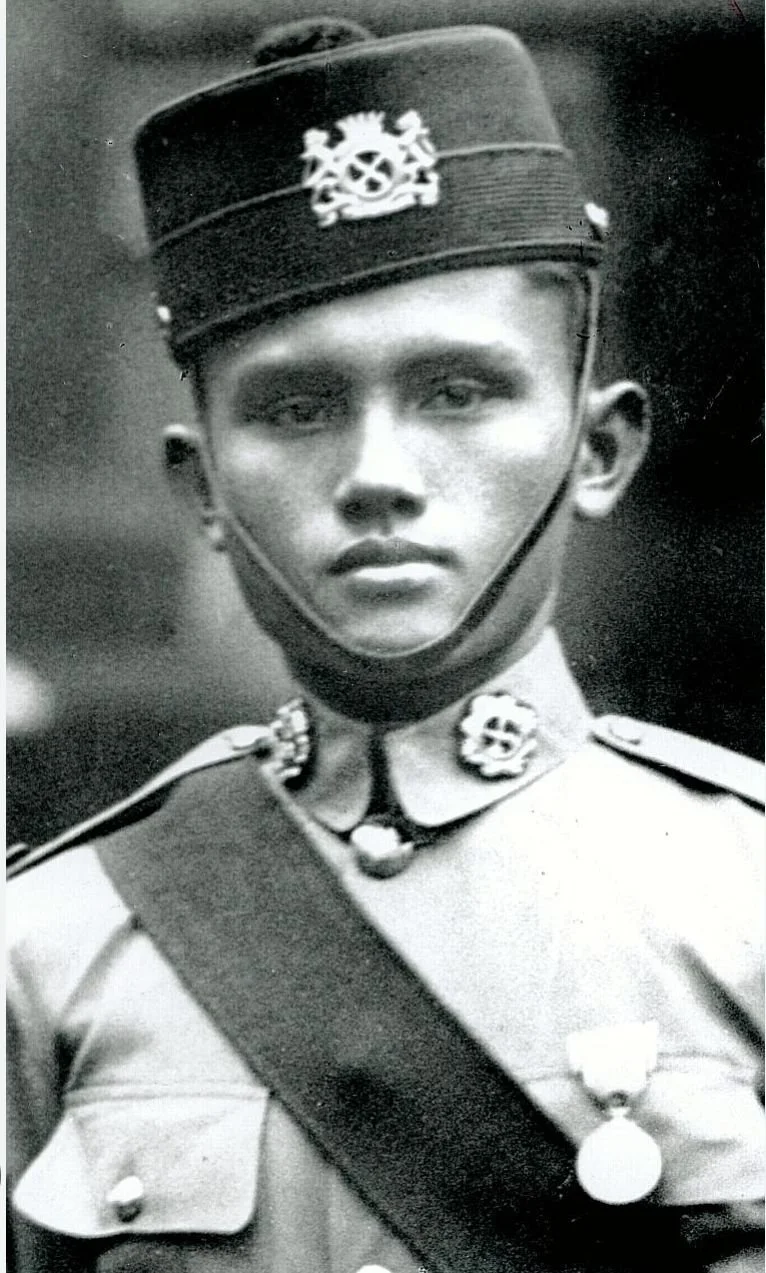
Fearless and Relentless
Lt Adnan Saidi
When his position was overrun, he was captured alive.
According to multiple eyewitness accounts preserved in Ramli's scholarship, the Japanese bayoneted Adnan and then hung his body upside down from a nearby rubber tree. No one was allowed to cut it down for burial.
The only surviving officer of "C" Company by the end was Lieutenant Abbas. He gathered his remaining men, led them through the blazing oil drain — two men fell into the burning oil and had to be dragged out — and brought three survivors back to Battalion Headquarters.
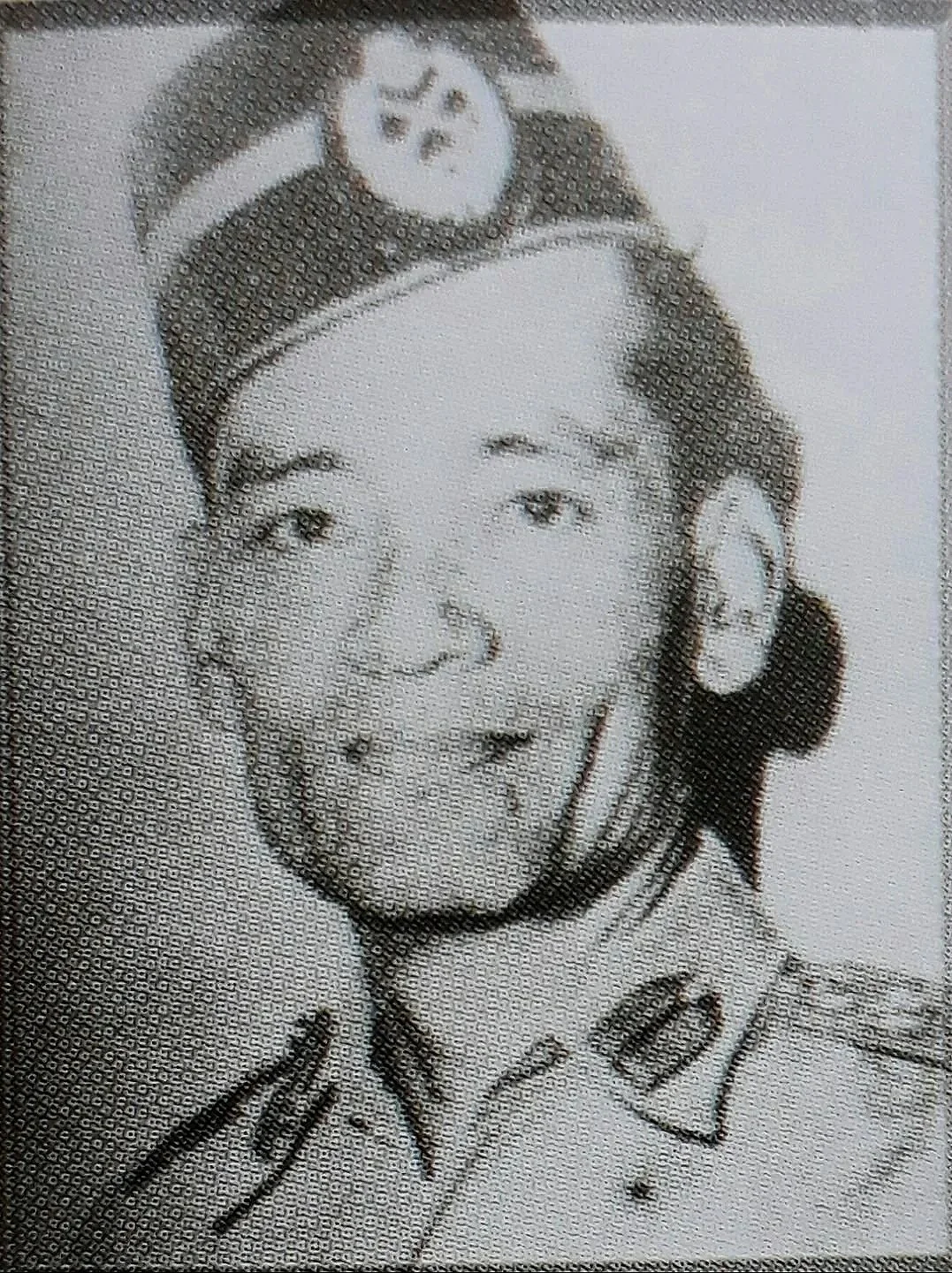
Second Lt. Abbas Manan
The hill had fallen. But the Japanese, according to Brigadier G.T. Denaro's account cited in Ramli, "would say lost half their force in the first opening of fire." Lieutenant MacKenzie of the 1st Battalion's Carrier Platoon, who arrived at the Alexander Brickworks area the next morning, found "two Malays wounded and covered in oil, remnants of 'C' Company which had been pretty well wiped out.
What Was Left
Lt.-General A.E. Percival, who commanded the Singapore garrison and signed the surrender a day later, would write of the Malay Regiment that they were not fully prepared for the ordeal they faced — but that "these young and untried soldiers acquitted themselves in a way which bore comparison with the very best troops in Malaya." He singled out Pasir Panjang Ridge specifically, calling it "an example of steadfastness and endurance which will become a great tradition in the Regiment."
Today, "Reflections at Bukit Chandu" — the WWII heritage centre at 31-K Pepys Road — stands not far from the ridge designated 226 – its height in feet above mean sea level, where all of this happened.
Return to the hill today. Stand still. Listen.
The battle is gone. The noise has faded. The smoke has long since cleared.
But something lingers. Not ghosts. Not echoes. Something subtler. A kind of moral gravity.
You may then recall the motto of the Malay Regiment - Ta'at Setia. Loyal and True.
On 14th of February 1942 they proved forever and beyond any shadow of doubt the truth of that.
The Iron Man Who Survived Footballs, Cricket Balls, the Japanese, and was saved by a Dutch Economist
It All Begins Here
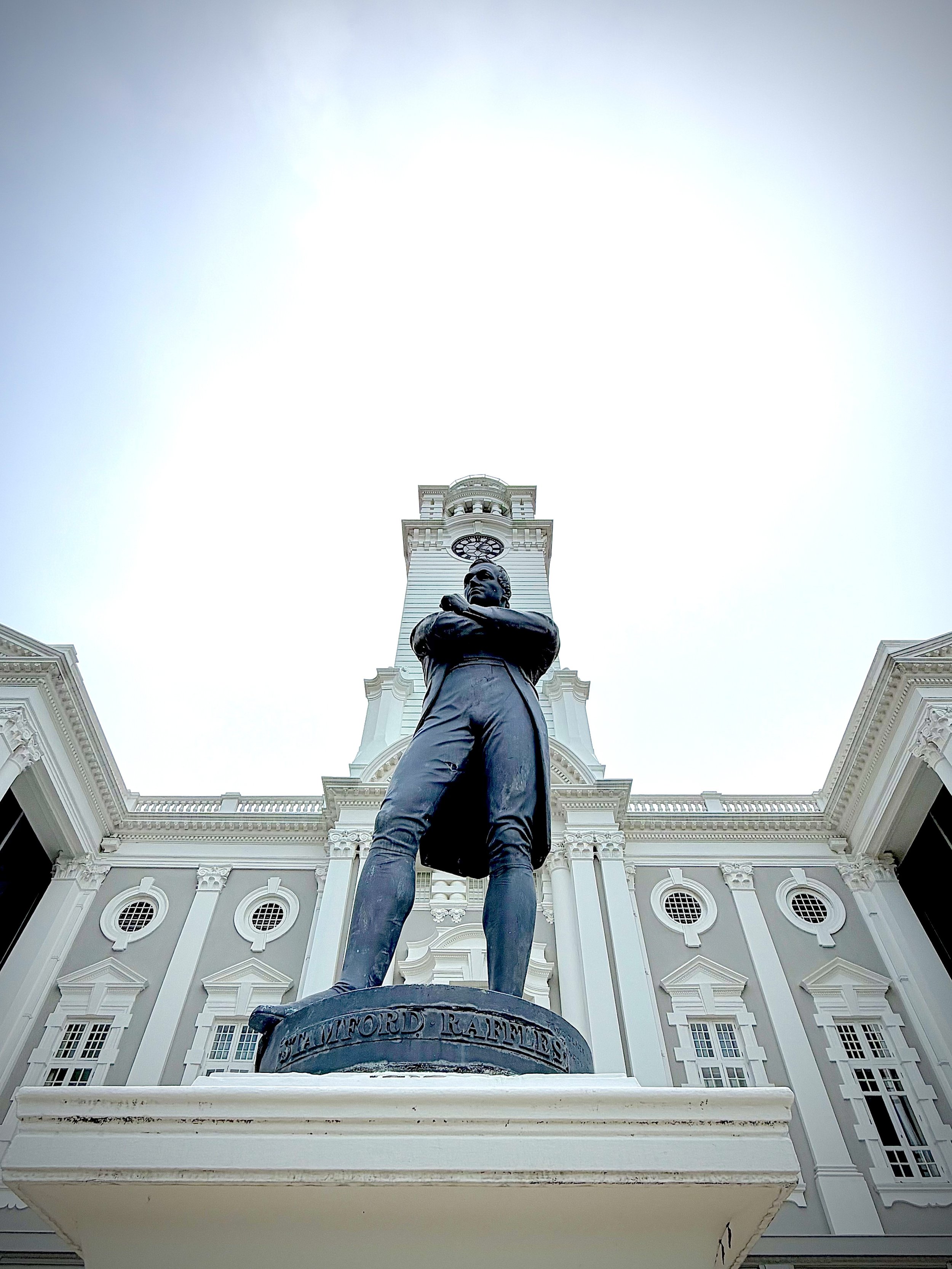
The story of Raffles' two statues is really the story of Singapore itself — colonial ambition, wartime survival, Cold War pragmatism, and a man who died sixty years before anyone thought to immortalise him in bronze.
Here is a fact that should give you pause the next time you walk past the bronze statue of Raffles outside the Victoria Concert Hall: the man it depicts died in 1826 — and nobody thought to commemorate him in bronze until sixty-one years later. For most of the nineteenth century, Sir Thomas Stamford Raffles was largely forgotten in the very city he had founded. No statue. No grand memorial. His name had been quietly attached to a lighthouse and a library, but the man himself had faded from view, buried under the relentless forward momentum of the colony he had planted on a swampy island at the tip of the Malay Peninsula. Then, in the 1880s, a newspaper decided to revive him — and everything changed.
What followed was one of the stranger odysseys in Singapore's civic history: a statue of bronze and a statue of polymarble, separated by a ten-minute walk and nearly a century of turbulence, each carrying the same crossed-arm pose, the same air of imperial self-assurance — and together forming a kind of dual biography of a city that has never quite been able to decide what it thinks of its founder.
The Man Who Made the Iron Man
The bronze statue was the work of Thomas Woolner (1825–1892), and if that name means nothing to you, consider his company: Woolner was one of the founding members of the Pre-Raphaelite Brotherhood, the revolutionary Victorian art movement that counted Millais, Holman Hunt, and Rossetti among its ranks. He was a sculptor and a poet, equally comfortable shaping bronze as writing verse, and by the 1880s he was one of the most sought-after public sculptors in the British Empire — the man behind the Captain Cook statue in Sydney and the Lord Palmerston in London, among many others.
There was, however, a significant problem with the commission: Raffles had been dead for sixty years, which meant Woolner had never seen him. Instead, he worked from existing portraits, and it is thought he modelled the Singapore statue primarily after earlier works by Francis Chantrey, who had sculpted Raffles from life. The eight-foot-tall bronze figure he produced depicted Raffles in civilian dress — arms folded, weight on one leg, gazing with that famous aura of quiet assurance — and at the base, Woolner added a small, almost invisible detail: a carved map of the Straits of Malacca, with Raffles' foot resting upon it, symbolising his planting of the British flag on these shores. The choice of civilian clothes was itself a quiet statement: this was a man of commerce and vision, not a soldier.
Two Raffles — Side by Side
The bronze original: 8 feet tall, cast by Pre-Raphaelite sculptor Thomas Woolner, unveiled 1887 at the Padang, now at Empress Place opposite Victoria Concert Hall
The polymarble replica: unveiled 1972 at Raffles' Landing Site, North Boat Quay — cast from plaster moulds taken from the 1887 original; white in colour, on a tall concrete pedestal
Distance between them: roughly 500 metres — a 10-minute walk along the Singapore River
Both statues depict the same pose: arms folded, weight on left leg, an expression of measured confidence
Both have been moved, hidden, debated, and survived attempts to be destroyed or removed
Football, Footnotes, and the Padang Years
On 27 June 1887 — Queen Victoria's Golden Jubilee Day — Governor Sir Frederick Weld unveiled the new statue at the Padang, Singapore's great open ceremonial field. The choice of occasion was telling: Raffles was being consciously recast as an imperial hero, a man whose vision had extended the Queen's dominions into the Far East. Before the grand opening, Inspector of Schools A.M. Skinner had held a competition among schoolboys for the best inscription to accompany the statue. The colonial establishment was not merely unveiling a piece of art — it was constructing a legend.
Reality, as usual, was rather less dignified. The statue's location at the Padang meant it stood in the middle of one of Singapore's most popular sporting grounds. It was routinely struck by errant footballs and cricket balls during matches. Spectators at the Padang treated its pedestal as a grandstand, climbing up for a better view of the game. The orang besi — iron man, as the locals nicknamed the blackened bronze figure — was being sat on, kicked at, and generally treated as part of the furniture. The colonial authorities were not amused. A more dignified location was clearly required.
They also had to clear the site of its previous occupant. The pedestal on which Raffles now stood had previously held an elephant statue, placed there in 1871 to commemorate a visit by King Chulalongkorn of Thailand. The elephant was quietly moved on. The Iron Man took his place.
The Centenary, the Colonnade, and the Clock Tower
The statue's rehabilitation came in 1919, on the centenary of Raffles' landing. Singapore was in a celebratory mood — a hundred years of colonial prosperity, rubber wealth, and the growth of one of the great ports of Asia — and Governor Sir Arthur Young oversaw the statue's relocation to a site in front of the Victoria Memorial Hall on 6 February 1919, marking exactly one hundred years since Raffles had first come ashore.
The new setting was magnificent. A semi-circular colonnade of the Italian Doric order was constructed to frame the statue. A marble-lined pool with fountain jets sat in front of it. Two rows of flower vases added colour to the classical composition. Most significantly, the statue was positioned with exquisite precision: it faced the mouth of the Singapore River, the supposed site of Raffles' landing, and was aligned axially with the centre of the clock tower of the Victoria Memorial Hall rising behind it. The effect — bronze man, fountain, colonnade, clock tower — was one of theatrical imperial grandeur. Raffles had been given his monument. At last, the orang besi had earned some dignity.
"To pretend that Raffles did not found Singapore would be the first sign of a dishonest society."— S. Rajaratnam, Singapore's first Foreign Minister, 1969
The Japanese and the Museum Storeroom
On 11 September 1942 — seven months after Singapore fell to the Japanese and was renamed Syonan-to, "Light of the South" — the bronze statue of Raffles was removed from Empress Place and taken to the Syonan Museum, the former Raffles Library and Museum now commandeered for Japanese purposes. The colonnade remained standing. The fountain and flower vases were left in place.
The rumours circulated quickly through the occupied city: the Japanese were planning to melt the statue for bronze. It was wartime, metal was scarce, and the symbolic value of destroying the effigy of Singapore's British founder would not have been lost on the occupiers. In the end, the melting never happened. Whether this was oversight, indifference, or a calculated decision remains unclear. The statue sat in storage for three years.
When the Japanese surrendered in 1945, the statue survived. But its beautiful setting did not. The colonnade had been damaged by bombing during the invasion and was found to be beyond repair when the British returned. Governor Sir Franklin Grimson reinstalled the bronze at Empress Place in July 1946 — but without the colonnade, without the fountain, without the flower vases, which were gone for good. The Doric splendour of 1919 was reduced to a statue on a pedestal. It has stood that way ever since.
1826
Raffles dies in London, aged 44. Singapore largely forgets him for sixty years.
27 June 1887
Bronze statue by Thomas Woolner unveiled at the Padang on Queen Victoria's Golden Jubilee Day. Nicknamed orang besi (iron man). Almost immediately used as a football obstacle and spectator seat.
6 February 1919
Centenary of Raffles' landing. Statue moved to Empress Place in front of Victoria Memorial Hall, framed by an Italian Doric colonnade, fountain, and flower vases.
11 September 1942
Removed to Syonan Museum during the Japanese Occupation. Rumours spread that the bronze will be melted for the war effort. It survives.
July 1946
Reinstalled at Empress Place by Governor Grimson. The colonnade, damaged by bombing, is gone forever.
1961–1965
Post-independence. Some PAP voices favour removing the statue. Dutch economist Albert Winsemius advises Lee Kuan Yew to keep it. It stays.
1972
White polymarble replica unveiled at Raffles' Landing Site on the Singapore River, marking the 153rd anniversary of his arrival.
January 2019
For the Bicentennial, companion statues of Sang Nila Utama, Munshi Abdullah, Tan Tock Seng, and Naraina Pillai are temporarily placed alongside the white Raffles at the landing site.
The Dutchman Who Saved the Iron Man
Here is the most remarkable chapter in this statue's long life — and the one least told. When Singapore achieved independence in 1965, the new People's Action Party government was ideologically hostile to the symbols of British colonialism. The PAP had campaigned as an anti-colonial socialist party. Across the newly decolonising world, statues of European administrators were being toppled, streets were being renamed, and the physical traces of empire were being systematically erased. There were voices within Singapore — including, reportedly, within the PAP itself — who were "all for casting the Raffles statue situated in front of Victoria Memorial Hall into the Singapore River."
The man who saved it was not Singaporean. He was Albert Winsemius, a Dutch economist who had been brought to Singapore in 1961 by the United Nations as an economic consultant. Winsemius gave Lee Kuan Yew famously blunt advice, condensed into two conditions for Singapore's success: eliminate the communists, and do not remove the statue of Stamford Raffles.
The reasoning was pure Cold War calculation. Singapore needed Western capital — American and European investment — to survive. Across the Causeway, Malaysia was battling a Communist insurgency. Across the water, Sukarno's Indonesia was nationalising foreign assets and sending soldiers into confrontation. For Singapore to keep a bronze British colonial prominent in its civic centre was, in Winsemius' reading, a message to Wall Street and the City of London: this new socialist government will not touch your assets. Lee, a deeply practical man, understood immediately. In his memoirs, he described the statue as a "symbol of public acceptance of the legacy of the British and could have a positive effect" on Singapore's future development. The Iron Man stayed. And the investment came.
The White Twin at the River
In 1972, the Singapore Tourist Promotion Board decided that 153 years after Raffles' first landing, the exact spot where he came ashore deserved its own monument. A plaster cast was taken from the original 1887 bronze, and from that cast a polymarble replica was made — same pose, same arms-folded authority, same map at the base, but rendered in white rather than the dark patina of the original. It was placed on the north bank of the Singapore River, on the site traditionally believed to be Raffles' landing point, and unveiled before a public that had grown up knowing only the bronze statue at Empress Place.
The white Raffles became, paradoxically, the more famous of the two. Every tourist arriving in Singapore's civic district photographs it. It stands at the bend of the river with the skyline of the financial district rising behind it — the towers of global capital forming the backdrop to the outstretched arms of the man who, in 1819, saw the commercial potential of this malarial estuary. The symbolism is almost too neat, yet the city wears it without irony.
There is, however, a twist: nobody is entirely certain Raffles landed here. The north bank of the Singapore River is tradition, not confirmed fact. An alternative account — derived from the Cho Clan Archives — holds that Raffles' ship carpenter, Chow Ah Chi, led the landing party ashore near the mouth of the Rochor River at Kallang, not here at all. The white statue stands on a disputed landing site, on a spot that may be entirely ceremonial, commemorating a moment whose exact geography has been lost to time.
Who Else Belongs Here?
In January 2019, for the Bicentennial celebrations, the government did something quietly radical. Around the white polymarble Raffles at the landing site, four additional statues were temporarily erected: Sang Nila Utama, the Palembang prince who founded Singapura in 1299; Munshi Abdullah, Raffles' secretary and interpreter, the great early Malay literary figure; Tan Tock Seng, the Chinese philanthropist who built the hospital that still bears his name; and Naraina Pillai, the first Indian building contractor, who constructed Sri Mariamman Temple.17 For the first time, the founding of Singapore was represented not as a single man's act of imperial vision, but as a convergence of peoples, communities, and centuries.
The companion statues were temporary. They came down. Raffles remained, as he always has.
Walk the five hundred metres between the two statues sometime — from the white figure at the river's edge to the dark bronze in the shadow of the clock tower — and you are walking through nearly two centuries of Singapore's complicated relationship with its own origins: the colonial myth, the wartime crisis, the Cold War calculation, the post-independence anxiety, and the ongoing, unresolved question of what a city owes to the man who put it on the map — and what it owes to all the people he never thought to mention.
The Iron Man is still watching. Both of him.
Sources & Further Reading
1. Project MUSE, "Appropriating the Founder: Raffles and Modern Singapore," 2023 — Woolner as Pre-Raphaelite Brotherhood founding member.
2. NLB Infopedia, "Statue of Stamford Raffles" — Woolner modelled after Francis Chantrey's works; NLB Singapore.
3. NLB Infopedia, ibid.; New Naratif, "Raffles Must Fall?" — the map / Straits of Malacca detail at the base of the statue.
4. BiblioAsia, NLB, "Raffles Displaced," Jan–Mar 2021 — the schoolboy inscription competition and the 1887 unveiling context.
5. NLB Singapore, "Statue of Stamford Raffles"; Mothership.SG, "Raffles statue at Empress Place unveiled 130 years ago," 2017.
6. NLB Singapore, "Statue of Stamford Raffles" — the elephant statue and King Chulalongkorn.
7. Straits Times, "Centenary of Singapore," 7 February 1919, as cited in NLB Infopedia.
8. NLB Singapore, ibid. — the Italian Doric colonnade, pool, and axial alignment with the clock tower.
9. Syonan Times, "Statue of Founder removed to Museum," 13 September 1942; NLB Infopedia.
10. History of Raffles Statues in Singapore, johorkaki.blogspot.com, 2020; NLB Infopedia.
11. Sunday Tribune, "Stamford Raffles Moves Back," 7 July 1946; NLB Infopedia.
12. S. Rajaratnam, speech at Shangri-La Hotel seminar, 28 April 1984, National Archives of Singapore, as cited in Contested Histories Occasional Paper, July 2020.
13. BiblioAsia, "Raffles Displaced," 2021; The Straits Times, "Singapore Is Indebted to Winsemius: SM," 10 December 1996.
14. Lee Kuan Yew, Straits Times, 10 December 1996, as cited in NLB Infopedia, "Statue of Stamford Raffles."
15. Roots.gov.sg, "Statue of Sir Stamford Raffles in front of the Victoria Memorial Hall"; Asian Art Platform, restoration notes on the polymarble statue.
16. Wikipedia, "Raffles' Landing Site" — the Cho Clan Archives alternative account.
17. Channel NewsAsia, "Sang Nila Utama, Pioneers Join Stamford Raffles along Singapore River," 4 January 2019.
The Corridor That Never Ends — And the Lost History Beneath It
It All Begins Here
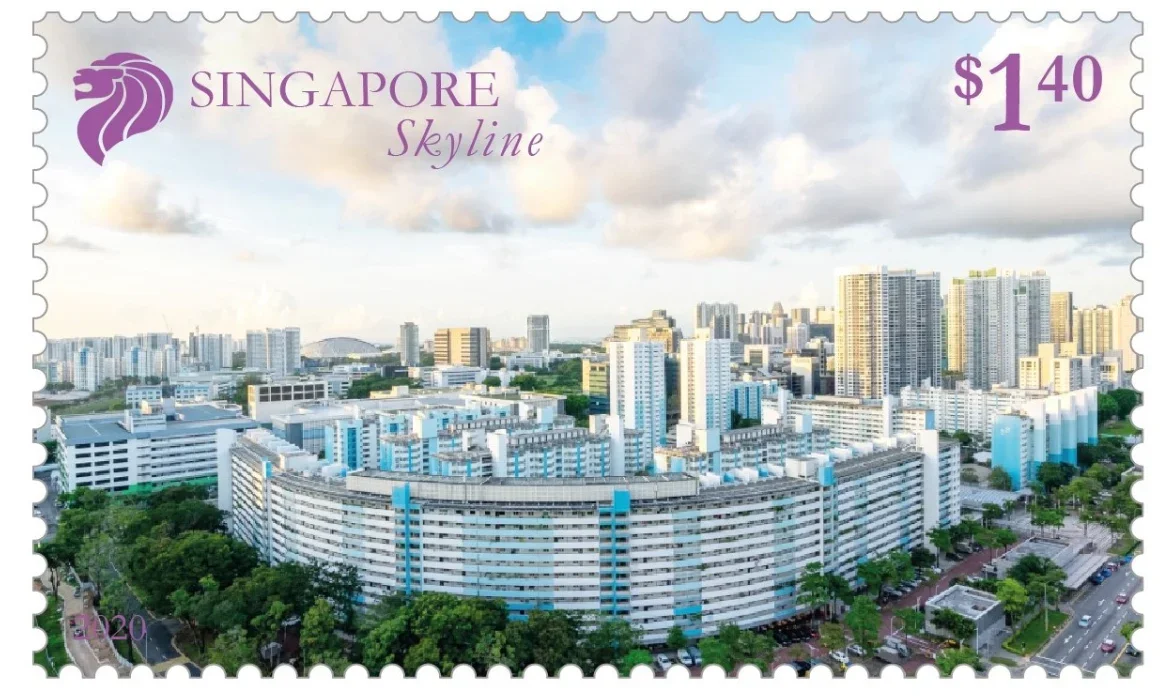
Four minutes to walk. Twelve storeys high. Nearly 500 homes. Block 34 Whampoa West is not just Singapore's longest corridor — it is a ghost story, a social experiment, and a monument to a man the whole neighbourhood is named after.
Start your timer. Now walk. You are at one end of the corridor on the seventh floor of Block 34 Whampoa West, and you can see the other end — just barely, far in the distance like the vanishing point of a dream. Between you and that far wall are 46 front doors, rows of potted plants, laundry drying in the warm air, a stray cat, possibly a delivery rider looking frantically at their phone. You will walk for three minutes and fifty-nine seconds before you reach the other side. The corridor is 320 metres long, curved gently like the arc of a very slow river, and it has been here since 1972. It is the longest continuous HDB corridor in Singapore. It is also, as we are about to discover, standing on ground so layered with history that it could make your head spin.
Block 34 is not famous in the way that Marina Bay Sands is famous, or the way that the Botanic Gardens are famous. It is famous the way only truly local things are famous — the kind of fame that lives in TikTok videos and childhood memories and the half-embarrassed pride of the people who actually live there. A realtor named Anne Ho once filmed herself walking the full length of a floor corridor, timer running, and posted it online. The comments filled with delivery riders shuddering in solidarity. But behind the meme is a building, and behind the building is a story about one of the most extraordinary men in nineteenth-century Singapore — and about what happens when a nation decides, in a single generation, to tear everything down and start again.
The Merchant Prince of Whampoa
Before there was a block, there was a mansion. And before the mansion, there was a fifteen-year-old boy from Canton who stepped off a boat in Singapore in 1830 with nothing but the name of his birthplace district and an extraordinary talent for business. His name was Hoo Ah Kay, but history would remember him almost exclusively by that birthplace — Whampoa.
By 1840, Hoo Ah Kay had built Whampoa & Co. into the primary ship chandler for the British Royal Navy at Singapore harbour. He baked bread at a Havelock Road bakery, imported ice from America at Boat Quay — one of the first ice houses in the colony — and supplied beef, vegetables and provisions to the frigates that kept the empire running. He was fluent in English in an era when almost no Chinese merchants were, which gave him access to the inner circles of colonial power that were simply closed to anyone else. He became the first and only Chinese person to serve as an extraordinary member of the Executive Council of the Straits Settlements. He held consular posts for Russia, China and Japan simultaneously. Queen Victoria herself gave him a Companion of the Order of St Michael and St George in 1876. The man was, by any measure, one of the most connected individuals in all of Southeast Asia.
But the true centre of Whampoa's legend was the grounds he built off Serangoon Road — a thirty-acre estate he called Nam Sang Hua Yuan (南生花园), or "Southern Gardens." It was not just a house. It was a spectacle. A Chinese garden tended by Cantonese horticulturists, famous for its rockeries, bonsai, ornamental topiaries and artificially shaped ponds. There was an aviary of peacocks, a menagerie, and — in one detail so perfectly Victorian it could have been invented — a vicious cassowary that regularly attacked unsuspecting guests. There was also a vast piggery, somehow kept immaculate, where pigs measuring up to seven feet from snout to tail were housed. Admiral Henry Keppel (yes, that Keppel, of Keppel Harbour) was a regular visitor. So, later, was the Chinese revolutionary Dr Sun Yat-Sen, who reportedly lived in the house during his exile from China.
"The fundamental human needs in a city have not changed for centuries. We need food, jobs, recreation, living and work spaces. If you can identify the fundamental need of human beings, you are on your way to creating a permanently well-functional, sustainable and liveable city."— Dr Liu Thai Ker, former Chief Architect and CEO of HDB, 1969–1989
When Hoo Ah Kay died in 1880, his remains were shipped back to China per his wishes. The estate passed to another wealthy Chinese towkay, Seah Liang Seah, who renamed it "Bendemeer House" — the name that gave Bendemeer Road its name today. Through the early twentieth century, Bendemeer House remained a landmark: a fading monument to Straits Chinese grandeur, a mansion that had once welcomed the cream of the British empire and then the architects of Chinese revolution within the same garden walls. After World War Two it was used to billet military personnel. By the 1960s, it was falling apart. In 1964, the Singapore government acquired the estate and its thirty acres. In March of that year, the demolition crews moved in. By the time they were done, one of the most storied pieces of private land in Singapore's history was rubble.
Clearing the Land, Filling the Sky
The story of what happened next is the story of Singapore itself. In 1960, nearly three-quarters of Singapore's 1.6 million people lived in squatter colonies — kampungs of attap and wood, without reliable sanitation, without security of tenure, often without running water. The Housing and Development Board, formed that same year, was given a mandate of almost terrifying ambition: house everyone. Now.
In less than a decade, the government had designed a Ring Plan — a series of housing estates circling the Central Catchment Area — and Whampoa was selected as one of the sites. The Bendemeer House land was cleared. The old kampungs nearby were resettled. And in the early 1970s, on the very ground where Hoo Ah Kay's peacocks had once roamed and Dr Sun Yat-Sen had plotted revolution, the concrete was poured.
Block 34 was described by the Straits Times at the time of its completion in 1971 as a "giant semi-circular" block — an unusual phrase that hints at something HDB planners were experimenting with at the time. The block curves to follow Whampoa West road, stretching from Serangoon Road at one end to Bendemeer Road at the other. Twelve storeys. Forty-six units per floor. Nearly five hundred homes. The first floor given over entirely to shops, a salon, restaurants — an instant vertical village. The 99-year lease began on 1 January 1972, a date as precise and bureaucratic as the building itself.
Block 34 at a Glance
Address: 34 Whampoa West, Singapore — the only block with a Whampoa West address, flanked by Bendemeer Road and Serangoon Road
Completed: 1 January 1972 (99-year lease start date)
Dimensions: approximately 312–320 metres long, 12 storeys, ~487 units
Corridor: the only fully continuous, uninterrupted corridor of its length in Singapore — roughly six laps of an Olympic pool
Walking time: 3 minutes 59 seconds at a steady pace, end to end
Structure: one curved segment, no breaks between the six lift lobbies (A to F)
Built on: former grounds of Whampoa House / Bendemeer House, the 19th-century estate of Hoo Ah Kay
Appeared on: a Singapore stamp issued in 2020
Corridors as a Social Technology
Here is the thing about the corridor that most people miss entirely when they are filming TikToks of themselves jogging its length: it was not an accident. It was a philosophy.
Dr Liu Thai Ker, the brilliant architect who served as Chief Architect and CEO of HDB from 1969 to 1989 and is often called Singapore's Father of Urban Planning, was explicit about what corridors were meant to do. He designed them deliberately as "community spaces in the sky" — not mere passageways, but the vertical equivalent of the kampung lane, the place where neighbours would inevitably meet, where children would play, where the passive accumulation of daily encounters would, over years, build something that planners in expensive offices can never build from scratch: trust. The corridor was a social technology deployed at scale.
In old slab blocks like Block 34, the corridors are 1.2 metres wide — narrow enough that you cannot pass someone without acknowledging them. Every unit opens directly to the shared walkway, which means strangers look into your home as they pass. For a generation that had come from kampungs where the entire community was your living room, this was not an intrusion. It was a translation: the same closeness, the same informal surveillance of mutual care, simply lifted ten floors into the air. As one sociologist writing in the Architectural Review put it, these corridors were Singapore's version of Alison and Peter Smithson's famous "streets in the sky" — the mid-century British concept of bringing the social life of the ground level upward into the tower.
The difference is that Singapore's version actually worked. Partly because the HDB mixed income levels deliberately — one-third former squatters with two-thirds urban dwellers — and partly because the proximity was inescapable. You could not get to your flat without walking past your neighbours. Liu Thai Ker was characteristically pragmatic about it: "In a larger neighbourhood, the spirit of community will take a longer time to foster versus if people are housed in smaller precincts, especially if you have only one entrance and you cannot avoid meeting your neighbours day in and day out."
What the Corridor Holds Now
Walk Block 34's corridors today and you encounter its archaeology. A journalist from Rice Media named Steph Lee did exactly this, spending a morning moving floor to floor, photographing the residents and the things they leave outside their doors. What she found was a building in gentle, dignified transition. Many units are empty — the original residents aged out, passed on, or moved in with children. The remaining elderly live alone or with helpers, their front doors sometimes left open to the corridor breeze. "See see lah. What is there to hide? Nothing to hide," one resident named Auntie Nisha told her with a shrug.
Then there is the greenery. Some residents — Rajan is one — have turned their stretch of corridor into a garden, plants spilling from every railing, ferns and cactus and trailing vines creating a tunnel of green above the concrete floor. A resident named Jimmy told Steph: "The long corridor is the reason why I say hi to all the uncles, because they do their gardening there." It is one of the loveliest ironies in Singapore urban life: the very length of this corridor, which was supposed to make community harder by separating people further, has instead created the conditions for gardens that become their own social magnetism, drawing people out of their doors to tend them and, in tending them, to talk.
The Ground: 1840s
Thirty acres of private gardens, peacocks, bonsai, a cassowary, water lily ponds. Hoo Ah Kay's Nam Sang Hua Yuan — one of the most famous homes in Southeast Asia. Open to the public at Chinese New Year.
The Ground: 1972 onward
Nearly 500 households in 320 metres of continuous concrete. A different kind of garden — corridor plants, potted ferns, hanging baskets. A different kind of community. Same human need.
There is something quietly devastating about this continuity. Where Whampoa's cassowary once prowled, residents now keep cats. Where Admiral Keppel once dined on cold beer chilled by saltpetre in deep stone cellars, families now leave rice cookers plugged in outside their doors to free up kitchen space. The gardens are gone, but the gardeners are still here, tending what they can in the space they have.
Why They Stopped Building Like This
Block 34 belongs to a brief and specific moment in HDB history — the 1970s slab block era — that produced a handful of these super-corridors before planners quietly moved away from the model. The reasons are not hard to find. A 320-metre corridor is an evacuation nightmare in a fire. It is expensive to maintain, light, and keep clean. It amplifies noise. And as Singapore grew more prosperous and people developed stronger preferences for privacy, the idea of strangers walking past your bedroom window began to feel less like community and more like exposure.
The newer HDB blocks — point blocks, clustered precincts, the dramatic sky bridges of Pinnacle@Duxton — solve the same problem differently. Instead of long corridors shared by many, they create smaller clusters shared by few. Liu Thai Ker's principle of the inevitable encounter was reengineered at smaller scale. The ideal, he argued, was no more than seven neighbours sharing a landing — close enough for faces to become familiar, not so many that the space becomes impersonal. Block 34's 46 neighbours per floor is the opposite of this ideal, which is precisely why it is also, paradoxically, a social miracle when it works.
Block 34 Whampoa West appeared on a Singapore postage stamp in 2020 — an acknowledgement, perhaps, that something worth preserving is happening here even as the newer towers rise around it. It stands, blue and white now where it was once all white, still curving along the road that bears the name of the man whose peacock garden it replaced. Stand at one end of its longest corridor and look down its length on a quiet morning: the vanishing point in the distance, the smell of someone's breakfast drifting out from behind a half-open door, the sound of a child's feet — and somewhere under all that concrete, 30 acres of water lilies in the memory of the ground.
Sources & Further Reading
1. NLB Infopedia, "Hoo Ah Kay," last updated 2021; BiblioAsia, "A Mansion in Serangoon: Whampoa House-Bendemeer," September 2025.
2. NLB Infopedia, "Hoo Ah Kay," National Library Board Singapore.
3. BiblioAsia, "A Mansion in Serangoon: Whampoa House-Bendemeer," September 2025.
4. Remember Singapore, "Whampoa's Majestic Long Curved HDB Block," October 2021.
5. NLB Infopedia, "Bendemeer House," July 2019; National Archives of Singapore, demolition photograph, 16 March 1964.
6. Dr Liu Thai Ker, interview with the Journal of Infrastructure, Policy and Development, as cited in LKYSPP/NUS, 2023.
7. The Straits Times (1971), quoted in Roots.gov.sg, "Block 34 Whampoa West, built 1971."
8. Home & Decor Singapore, "Late Architect Liu Thai-Ker: Every HDB block is as beautiful as Miss Universe," January 2026.
9. The Architectural Review, "The public housing paradox in Singapore," September 2023.
10. Home & Decor Singapore, "Late Architect Liu Thai-Ker," January 2026.
11. Rice Media, "Singapore's Longest Curved HDB Corridor, and the Distance Between Our Neighbours," August 2024.
12. Ibid.
13. Mothership.SG, "HDB flats built in 1970s had corridors over 300m: How did long common corridors become unpopular?," November 2021; Home & Decor Singapore, "Longest HDB Block: 34 Whampoa West is the 'Great Wall of Whampoa'," July 2025.
The Building That’s Also The Architect’s Signature - in Chinese.
It All Begins Here
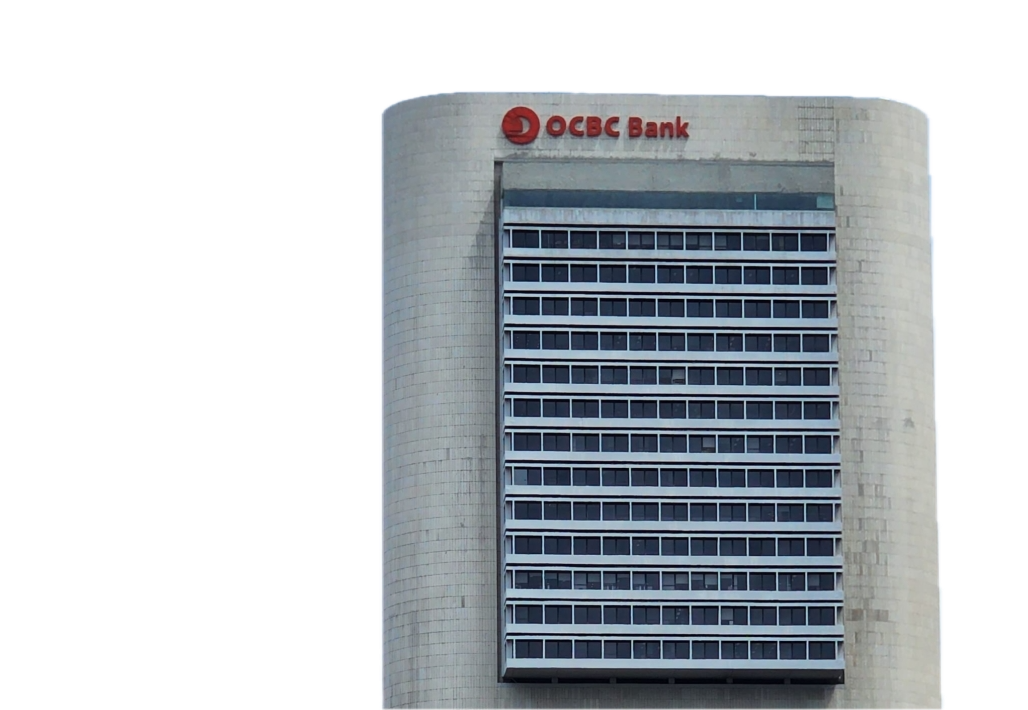
I.M. Pei didn't just build what was Singapore's tallest skyscraper in 1976 — he may have hidden his own Chinese name in it. And that's only the beginning of the story.
Picture Singapore in 1970. The tallest building on the island is eight storeys. The skyline is a gentle rumple of shophouses, colonial offices, and the odd mid-rise poking above the trees. Then a Chinese-American architect named Ieoh Ming Pei steps off a plane, shakes hands with a banker named Tan Chin Tuan, and begins drawing something that would change the profile of the city forever. Six years later, at 65 Chulia Street, a 52-storey brutalist titan pierces the sky above the Singapore River — the tallest building in all of Asia outside of Japan. And if you know where to look, it is also, quite possibly, a love letter written in Chinese.
This is the story of OCBC Centre: a building that arrived like a declaration, was engineered through a brilliant act of deception, carries a myth inside its very bones — and, in 2024, became home to Singapore's rarest breeding bird. It is the most quietly astonishing building in the city, and most people walk past it without a second glance.
What Stood Here Before
There has been a bank on this site since 1932, when the Oversea-Chinese Banking Corporation first threw open its doors with an authorised capital of $40 million and planted its flag in a six-storey building called the China Building, designed by the firm Keys and Dowdeswell in an ornate Peking style — all decorative eaves and Chinese signifiers meant to project power and tradition to a community of merchants who had crossed oceans to build their fortunes in the Straits Settlements.
The China Building had its own quiet glamour. In the 1950s and early 1960s, OCBC chairman Lee Kong Chian — one of the most powerful businessmen in Southeast Asia, the rubber and pineapple magnate who would later endow the Lee Kong Chian Natural History Museum — hosted regular lunches at the Garden Club on the building's top floor. The who's who of Chinese business in Singapore would gather there to talk commerce and politics, in a room that smelled of ambition. For nearly forty years, the China Building was the house of money in Singapore.
By the late 1960s, though, OCBC had simply outgrown it. The bank bought up surrounding land and shophouses. They needed something bigger, something bolder. And Tan Chin Tuan, OCBC's president, had exactly the right man in mind — a family friend he happened to know personally. In commissioning I.M. Pei & Partners, he made I.M. Pei the very first foreign architect to be formally invited to design a building in Singapore. That single handshake opened a door that has never closed — every trophy project in the city built by foreign firms since then can trace its lineage to this moment.
The Building at a Glance
Address: 65 Chulia Street, Singapore — overlooking the Singapore River at the head of the Golden Shoe financial district
Height: 197.7 metres (649 feet), 52 storeys
Cost: S$100 million — the most expensive urban renewal project in Singapore at the time
Completed: 1 October 1976, after just under two years of construction
Record: Tallest building in Southeast Asia and tallest in Asia outside Japan upon completion
Contractor: Morrison-Knudsen International (USA) and Low Keng Huat Construction (Singapore)
The Great Engineering Trick
Here is the problem Pei faced when he arrived in Singapore in the early 1970s: he had been asked to build a 52-storey skyscraper in a country where the tallest existing building was eight storeys high. There were no contractors with experience building anything remotely that tall. The technical challenge was enormous. The psychological one was arguably worse — how do you convince a building industry that has never gone above eight floors to trust you on fifty-two?
Pei's answer was a piece of architectural genius disguised as simplification. Rather than present Singapore's contractors with a single overwhelming tower, he broke the problem into thirds. The design conceived the building as three separate fifteen-storey structures stacked on top of each other, connected by massive post-tensioned steel transfer girders at the 4th, 20th, and 35th floors. The contractors were not being asked to build the tallest skyscraper in Asia — they were being asked to build a fifteen-storey building, three times, one on top of the other.
The structural core of the building consists of two enormous semi-circular concrete columns — one at each end — which anchor everything and house the building's 27 elevators, staircases, and service utilities. The office floors hang between these cores like the rungs of a ladder, entirely column-free. The result at ground level is a banking hall 175 feet long by 120 feet wide with not a single interior support — a cathedral of commerce, vast and unbroken. The trick worked. The building went up in less than two years. When it opened, it boasted the fastest elevators in the city, travelling at 366 metres per minute.
"Pei determined to build a straightforward expression of structure, simplifying the complex so that the wary contractor was not challenged by Singapore's tallest skyscraper, but three fifteen-story buildings stacked on top of each other."— I.M. Pei Foundation, project documentation
Before construction could begin, OCBC faced its own logistical nightmare: moving decades' worth of enormous bank safes out of the China Building. A young boy named Teo Chee Hean — whose father was then an assistant general manager at the bank — was brought along to witness the event. He watched as cranes arrived, part of the China Building's roof was removed to create clearance, and the massive safes were hoisted up and out into a neighbouring building on Upper Pickering Street. The future Deputy Prime Minister of Singapore was, at that moment, watching Singapore's future being craned into the sky one safe at a time.
The Myth Written Into the Walls
Now we arrive at the part of this story that will rearrange the way you see this building forever. Stand on the opposite bank of the Singapore River, or look at the OCBC Centre from above, and you will notice something odd. The building's profile — those two semi-circular concrete cores flanking a rectangular central block — bears an uncanny resemblance to a Chinese character. Specifically, the character 貝 (bèi), meaning shell or, more historically, currency itself. In ancient Chinese civilisation, shells were the original medium of exchange. "Bei" is the root embedded in dozens of financial and commercial Chinese words to this day.
OCBC is a bank. Its motto is "Solid as a Rock." The character for the ancient currency unit is built into the facade. Coincidence? Perhaps. But then consider this: I.M. Pei's Chinese surname is also 貝 — Pei. The man built a bank and encoded his own family name into its silhouette.
And the rabbit hole goes deeper. According to feng shui analysts who have studied Pei's Singapore work, the OCBC Centre was only the first move in an elaborate urban calligraphy. His second Singapore project, the Swissôtel The Stamford (1986), is said to resemble the character 岳 or 耀 — phonetic echoes of "Ieoh," his given name. His third, The Gateway (1990), with its two dramatically angled towers, reportedly evokes 明 — "Ming," his middle name. Laid out on a map, the three buildings form a sequential line across the city. Whether this was intentional design or the projection of a pattern-hungry culture onto raw concrete, nobody has ever definitively proved — or disproved.
The feng shui reading of the site is equally elaborate. The OCBC Centre is said to sit at a formation known as "Carp Jumping the Dragon Gate" — a classically auspicious positioning in Chinese geomancy, associated with dramatic leaps in fortune and status. For a bank whose founding mythology was built by immigrant Chinese entrepreneurs who had themselves leapt oceans to reach Singapore, the symbolism is almost too perfect.
The Sculptor and Three Trips to England
Pei did not stop at the building itself. He wanted something in the plaza to match — a piece of art powerful enough to hold its own against 198 metres of brutalist concrete. His choice was Henry Moore, the great British sculptor, then in the final years of his career. Pei had seen a 13-inch maquette Moore had made in 1938 — a small reclining bronze figure that had sat largely forgotten for four decades. He wanted Moore to blow it up, to scale that miniature into something monumental.
Moore said no. Pei went back. Moore said no again. Pei made a third trip to Moore's studio in Hertfordshire and, finally, on the third visit, convinced the elderly sculptor to do it.10 The result, installed in the plaza in 1984, is the Large Reclining Figure — a 25-foot-long bronze, the largest walk-through sculpture Henry Moore ever produced, and one of the last works he completed before his death in 1986. It replaced an earlier piece by Singaporean artist Tan Teng Kee, which had stood at the building since its opening. The Moore sits there today in a reflecting pool, organic and sensuous against the hard geometry of the tower above — the breezy feminine counterpoint to all that brutal masculine concrete, as if Pei planned the contrast all along. He probably did.
1932
OCBC founded; headquartered in the China Building at the same Chulia Street site, designed in decorative Peking style by Keys and Dowdeswell.
1968–1970
OCBC buys surrounding land. China Building demolished. Tan Chin Tuan commissions I.M. Pei — the first foreign architect invited to build in Singapore.
1975–1976
Construction by Morrison-Knudsen and Low Keng Huat. Completed in under two years using Pei's three-stacked-towers structural trick.
1 October 1976
Official opening. Southeast Asia's tallest building. Tallest in Asia outside Japan. Singapore's most expensive urban renewal project at S$100 million.
1984
Henry Moore's Large Reclining Figure installed in the plaza — Moore's largest sculpture ever and one of his last works.
April 2024
A pair of peregrine falcons lay eggs in a recess on the 34th floor — Singapore's first recorded nesting pair of the species.
April 2025
Two chicks successfully hatch and fledge — Singapore's first-ever recorded peregrine falcon chicks.
March 2026
Four chicks hatch in the same 34th-floor recess. The building's CCTV livestream of the nest becomes a minor national obsession.
The Falcons on the 34th Floor
If all the above feels like the kind of history that happens once and then calcifies into a plaque, consider what has been unfolding on the building's exterior for the past two years. On the night of January 30, 2024, a visiting ornithologist named Marc Kery from the Swiss Ornithological Institute was walking near the CBD when he spotted a fast-moving silhouette near the OCBC Centre. He returned the next day with binoculars. He was not wrong: a pair of Indo-Pacific peregrine falcons — Falco peregrinus ernesti — had chosen a concrete recess on the building's 34th floor, facing the Singapore River, as their nesting site.
Peregrine falcons are the fastest animals on Earth in a dive. In the wild, they nest on exposed cliff ledges. A 198-metre modernist skyscraper, it turns out, is a reasonable facsimile of a cliff face — good sightlines, unobstructed launch points, and an urban sky full of pigeons. The pair laid eggs that April. The eggs were laid on bare concrete and ultimately abandoned. NParks researchers, working with SUTD engineers, installed a gravel nesting tray in November 2024. By April 2025, two chicks had successfully hatched and fledged — the first recorded peregrine falcon chicks in Singapore's history. In early 2026, the same pair returned and laid four eggs. All four hatched. NParks streamed the nest live from March 5, and the nation watched, rapt, as four downy chicks wobbled at the edge of one of Singapore's most historic buildings.
OCBC's head of communications said at the time: "It is sometimes said that when a bird chooses to nest at your home, it can bring good luck to the owner." The bank — whose motto has always been "Solid as a Rock" — is apparently now also a cliff.
A Building That Is Still Becoming
In early 2025, OCBC announced it was deferring plans to redevelop the Chulia Street complex, citing capital priorities and the difficulty of preserving what has now been designated a historic structure by Singapore's National Heritage Board. The building, in other words, is not going anywhere. It is too important — legally protected, architecturally singular, and embedded in too many layers of history to be quietly demolished and replaced with glass.
And so it stands: a brutalist landmark that carries inside it the story of Singapore's post-independence leap of ambition; the coded signature of a Chinese-American architect who may have written his name across a city in concrete; a Henry Moore that took three trips to England to commission; the memory of a young future Deputy Prime Minister watching bank safes swing through the air on a crane; and, right now, at this very moment, a family of peregrine falcons raising their fourth generation of chicks in a gravel tray on the thirty-fourth floor.
Most people walking along Chulia Street just see a big old building with a funny shape. Now you know better. Look up. The building has been watching you back for fifty years, and it has quite a few things to say — if only you know how to read the character it carved into the Singapore sky.
Sources & Further Reading
1. Nestia, "41-year-old OCBC Centre designed by famed architect I.M. Pei," 2018; Keys & Dowdeswell attribution via OCBC institutional history.
2. OCBC commemorative book, Wind Behind the Sails, as cited in Nestia, 2018.
3. I.M. Pei Foundation, project page: Oversea-Chinese Banking Centre; Site Visits, "Representing the OCBC Centre by I.M. Pei," October 2019.
4. I.M. Pei Foundation, project documentation; also Docomomo Singapore, "OCBC Centre," 2021.
5. Pei Cobb Freed & Partners, project description, pcf-p.com; Docomomo Singapore, "OCBC Centre," 2021.
6. OCBC commemorative book, Wind Behind the Sails, DPM Teo Chee Hean's account, as cited in Nestia, 2018.
7. Way Fengshui Group, "The Complex Relationship between OCBC Building and I.M. Pei," November 2018.
8. Ibid.
9. Ibid.
10. I.M. Pei Foundation, project page; Site Visits, "Representing the OCBC Centre by I.M. Pei," October 2019.
11. Xinhua Feature, "Peregrine falcon family in Singapore's city center," March 16, 2026.
12. NParks, "First record of Peregrine Falcon chicks in Singapore," May 2025; Xinhua, March 2026.
13. Koh Ching Ching, OCBC, quoted in Mothership.SG, "1st record of rare peregrine falcons nesting in S'pore," November 2024.
14. Business Times / citicommercial.com.sg, "Why did OCBC put Chulia Street redevelopment plans on the back burner?," 2025.

A Stone at the Edge of History
It All Begins Here
For over a thousand years, a mysterious, massive inscribed boulder stood at the mouth of the Singapore River — and then in 1843 the British blew it up!
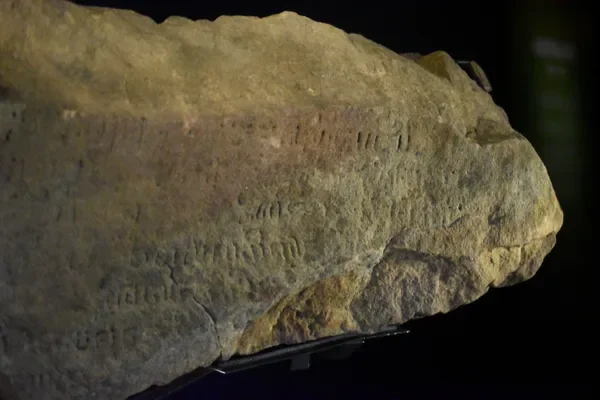
Imagine you are a labourer hacking through the jungle at the mouth of the Singapore River in June 1819. The air is thick and wet. Raffles has just planted his flag, and the island is being carved open for business. Your machete swings — and hits something that rings like a bell. You step back. There before you, half-swallowed by roots and time, is a sandstone boulder the size of a small house. And covering its face, from top to bottom, in fifty dense lines: writing. Strange, spiralling writing that nobody — not you, not your foreman, not the British officers summoned to see it — can read. It has been waiting here for centuries.
This is the Singapore Stone. And if you have lived your whole life on this island without knowing its story, I promise you: you are about to feel cheated out of one of the greatest secrets ever buried in plain sight.
The Giant at the River's Mouth
The stone was no modest artefact. At roughly three metres tall and three metres wide, it dominated the rocky promontory then called Artillery Point, at the very place where the Singapore River spills into the Strait. The inscription covered a surface 2.1 metres wide and 1.5 metres high — fifty lines of text carved with evident intention and craft, though with what one early observer tartly called "workmanship far ruder than anything of the kind I have seen in Java or India.".
That observer was the British Resident John Crawfurd, who noted in his 1822 journal that the inscription was already illegible as a composition. Even then, with the stone still standing, the centuries had done their work. Yet its presence was unmistakable — a monumental, deliberate statement in a script that straddled the edge of the known world. Who had put it there? When? And — most maddeningly of all — what on earth did it say?
Even Stamford Raffles, who prided himself on his knowledge of Malay civilisation, was defeated by it. He studied the stone and got nowhere. In 1837, a Royal Navy surgeon named Dr. William Bland made the first — and, it would turn out, most important — detailed facsimile of the inscription, pressing the surface to capture its characters before time erased them entirely. That facsimile, published in the Journal of the Asiatic Society of Bengal, would become the sole record of lines of text that no longer exists.
The Crime of 1843
What happened next is the kind of historical atrocity that makes archaeologists weep. In January 1843, Captain D.H. Stevenson of the East India Company decided the mouth of the Singapore River needed widening and that the area needed quarters for British Army commandants. The Singapore Stone was in the way. So he blew it up.
"A large block of the rock lay at the corner of Government House, where Fort Canning is now; but during the absence of the Governor at Penang on one occasion, the convicts requiring stone..."
— W.H. Read, who arrived in Singapore in 1841, describing the aftermath
The explosion reduced a thousand-year-old monument to rubble. What wasn't blasted was plundered. A large block sat neglected at Government Hill until it was quietly broken up and used as road gravel. One surviving fragment was discovered in the verandah of the Treasury, where — in a detail almost too perfect in its indignity — it had been serving as a seat for sepoys. It had spent centuries as a declaration of power; now it was a bench!
A Scottish military officer, Lieutenant-Colonel James Low, had loudly objected to the destruction. He was ignored. But in the aftermath, he salvaged three fragments and shipped them to the Royal Asiatic Society's museum in Calcutta for study. They arrived in 1848. In 1918, Singapore requested the fragments back. Only one was returned. The fate of the other two remains unknown to this day — lost somewhere in the labyrinthine archives of colonial India, rumoured by some to be in the Calcutta Museum archives.
A Script From Nowhere
Here is where the mystery deepens into something genuinely unsettling. The inscription on the Singapore Stone is not simply unread. According to one researcher, its writing system is "not compatible with any other script currently discovered" — meaning that if they are right, this inscription is the sole known example of its own writing system in the entire world. Not a regional variant. Not a corrupted dialect.
Most scholars, however, lean toward identifying the script as Kawi — a Brahmic writing system used across Java and parts of Southeast Asia between the 8th and 16th centuries. The language encoded in it remains unknown, with serious arguments made for Old Javanese, Sanskrit, and Tamil. In 2023, an analysis comparing the Stone to the Calcutta Stone of 1041 CE found numerous stylistic parallels, aligning it more specifically to the Later Kawi period of the 10th to 13th centuries.
But the most electrifying theory belongs to Australian researcher Dr. Iain Sinclair, who in 2019 identified a fragment of text that might read "kesariva" — likely part of the word parakesarivarman, a royal title used by kings of the Tamil Chola dynasty. If he is right, the Singapore Stone does not merely predate Raffles. It may predate the conventional founding of Singapore by the Malay prince Sang Nila Utama in 1299 by three hundred years — placing Tamil Chola influence at the Straits of Singapore as early as the 11th century.
The Legend of Badang the Strongman
Long before the scholars arrived, the stone had a story. According to the Sejarah Melayu — the great Malay Annals, the closest thing this region has to a foundational epic — Badang was a fisherman who ate the vomit of a river spirit (yuck!) and gained the strength of a hundred men. He became the champion of the Raja of Singapura, performing impossible feats before the assembled courts of India and beyond.
The tale most relevant to our stone: that Badang once hurled a massive boulder from Fort Canning Hill all the way to the mouth of the Singapore River. And on his death, two great stone pillars were raised over his grave "at the point of the straits of Singapura." Locals had always whispered that the Singapore Stone was Badang's stone. That the inscription was the mark of his impossible throw — a giant's autograph scratched into a river rock.
There is, of course, no archaeological evidence for this. But there is something deeply human about it: the desire to explain a thing so old and so strange that only myth can explain it. When you cannot read what a stone says, you let it say whatever the heart requires.
The Stone Today — and What Might Still Be Found
The surviving fragment sits in the History Gallery of the National Museum of Singapore, worn and small and quietly devastating — a chip off what was once a monument, fading further with every decade. The inscription on even this piece is vanishing. You can visit it. You can stand before it. You will not understand it.
But the story is not over. Researchers at Nanyang Technological University and elsewhere are developing machine-learning tools to "read" the surviving symbols, reconstruct missing characters from old facsimiles, and generate a complete recoverable text of all fifty lines. The idea is to assemble enough material for pattern recognition — to give the algorithms the puzzle pieces needed to begin seeing language where we see only shapes. It is, in a way, the Rosetta Stone problem: you need enough text to find the key. Right now, there is barely enough stone.
The Singapore Stone is, officially, one of this nation's eleven national treasures. It predates the colonial city, predates the Malay sultanate, predates perhaps the very name Singapura itself. It sat at the river's mouth for centuries, watching every trader, every sailor, every empire pass through the Strait — Srivijaya, Majapahit, the Portuguese, the Dutch, finally the British — and it said something to all of them. None of them could understand it. The British, characteristically, got rid of it.
What was written on that stone? We do not know. But the fragment is still here, in a glass case in a museum on an island that has remade itself a dozen times since the stone was carved — still holding its breath, still keeping its secret, still waiting for someone clever enough to ask it the right question.
The stone knew Singapore's name before Singapore did. One day, perhaps, we'll know its name in return.
Sources & Further Reading
1. John Crawfurd, Journal of an Embassy to the Courts of Siam and Cochin China, 1828.
2. Dr. William Bland, Journal of the Asiatic Society of Bengal, 1837, as cited in Laidlay (1848).
3. W.H. Read, quoted in the Singapore Stone Wikipedia entry; Governor Butterworth correspondence, 1843.
4. The Conversation, "The Singapore Stone's carvings have been undeciphered for centuries," December 2025.
5. Lee I-Shiang et al., "Unravelling the Mystery of the Singapore Stone," Histories (MDPI), August 2023.
6. Dr. Iain Sinclair, in From Sojourners to Settlers, ISEAS–Yusof Ishak Institute / Indian Heritage Centre, December 2019.
7. Sejarah Melayu (Malay Annals); also Omar, M. "Badang," National Library Board Singapore, 2006.
8. The Conversation / Academia.edu, research project at NTU Singapore and Xi'an Jiaotong-Liverpool University, 2024.