
The Corridor That Never Ends — And the Lost History Beneath It
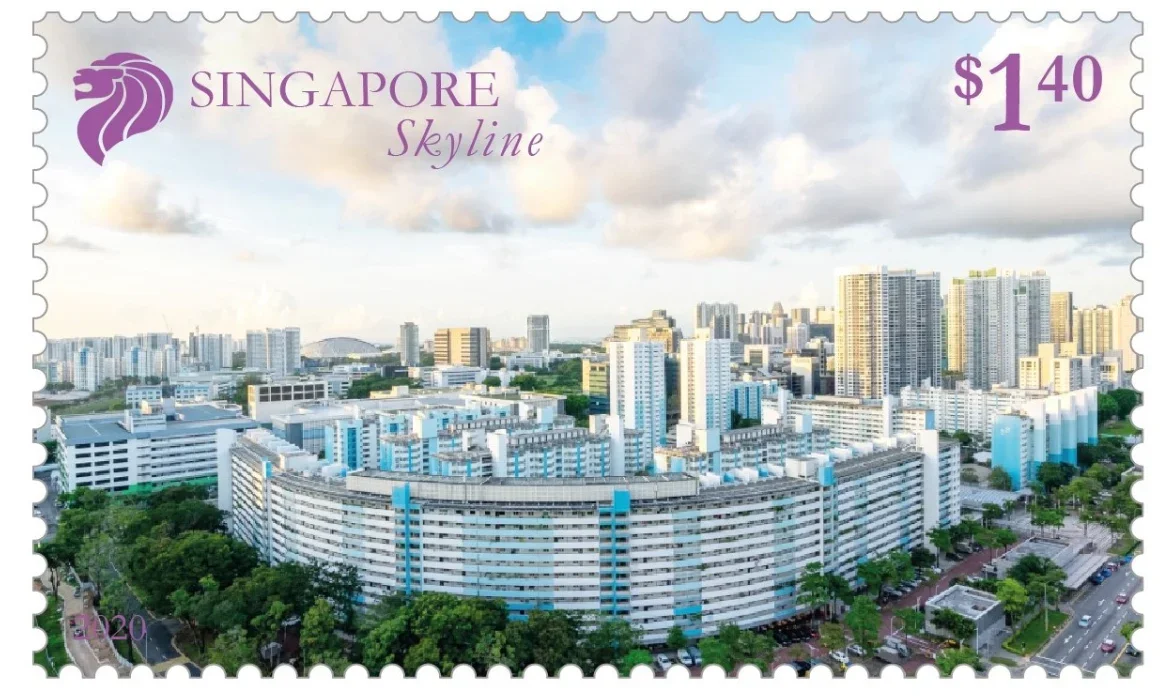
Four minutes to walk. Twelve storeys high. Nearly 500 homes. Block 34 Whampoa West is not just Singapore's longest corridor — it is a ghost story, a social experiment, and a monument to a man the whole neighbourhood is named after.
Start your timer. Now walk. You are at one end of the corridor on the seventh floor of Block 34 Whampoa West, and you can see the other end — just barely, far in the distance like the vanishing point of a dream. Between you and that far wall are 46 front doors, rows of potted plants, laundry drying in the warm air, a stray cat, possibly a delivery rider looking frantically at their phone. You will walk for three minutes and fifty-nine seconds before you reach the other side. The corridor is 320 metres long, curved gently like the arc of a very slow river, and it has been here since 1972. It is the longest continuous HDB corridor in Singapore. It is also, as we are about to discover, standing on ground so layered with history that it could make your head spin.
Block 34 is not famous in the way that Marina Bay Sands is famous, or the way that the Botanic Gardens are famous. It is famous the way only truly local things are famous — the kind of fame that lives in TikTok videos and childhood memories and the half-embarrassed pride of the people who actually live there. A realtor named Anne Ho once filmed herself walking the full length of a floor corridor, timer running, and posted it online. The comments filled with delivery riders shuddering in solidarity. But behind the meme is a building, and behind the building is a story about one of the most extraordinary men in nineteenth-century Singapore — and about what happens when a nation decides, in a single generation, to tear everything down and start again.
The Merchant Prince of Whampoa
Before there was a block, there was a mansion. And before the mansion, there was a fifteen-year-old boy from Canton who stepped off a boat in Singapore in 1830 with nothing but the name of his birthplace district and an extraordinary talent for business. His name was Hoo Ah Kay, but history would remember him almost exclusively by that birthplace — Whampoa.
By 1840, Hoo Ah Kay had built Whampoa & Co. into the primary ship chandler for the British Royal Navy at Singapore harbour. He baked bread at a Havelock Road bakery, imported ice from America at Boat Quay — one of the first ice houses in the colony — and supplied beef, vegetables and provisions to the frigates that kept the empire running. He was fluent in English in an era when almost no Chinese merchants were, which gave him access to the inner circles of colonial power that were simply closed to anyone else. He became the first and only Chinese person to serve as an extraordinary member of the Executive Council of the Straits Settlements. He held consular posts for Russia, China and Japan simultaneously. Queen Victoria herself gave him a Companion of the Order of St Michael and St George in 1876. The man was, by any measure, one of the most connected individuals in all of Southeast Asia.
But the true centre of Whampoa's legend was the grounds he built off Serangoon Road — a thirty-acre estate he called Nam Sang Hua Yuan (南生花园), or "Southern Gardens." It was not just a house. It was a spectacle. A Chinese garden tended by Cantonese horticulturists, famous for its rockeries, bonsai, ornamental topiaries and artificially shaped ponds. There was an aviary of peacocks, a menagerie, and — in one detail so perfectly Victorian it could have been invented — a vicious cassowary that regularly attacked unsuspecting guests. There was also a vast piggery, somehow kept immaculate, where pigs measuring up to seven feet from snout to tail were housed. Admiral Henry Keppel (yes, that Keppel, of Keppel Harbour) was a regular visitor. So, later, was the Chinese revolutionary Dr Sun Yat-Sen, who reportedly lived in the house during his exile from China.
"The fundamental human needs in a city have not changed for centuries. We need food, jobs, recreation, living and work spaces. If you can identify the fundamental need of human beings, you are on your way to creating a permanently well-functional, sustainable and liveable city."— Dr Liu Thai Ker, former Chief Architect and CEO of HDB, 1969–1989
When Hoo Ah Kay died in 1880, his remains were shipped back to China per his wishes. The estate passed to another wealthy Chinese towkay, Seah Liang Seah, who renamed it "Bendemeer House" — the name that gave Bendemeer Road its name today. Through the early twentieth century, Bendemeer House remained a landmark: a fading monument to Straits Chinese grandeur, a mansion that had once welcomed the cream of the British empire and then the architects of Chinese revolution within the same garden walls. After World War Two it was used to billet military personnel. By the 1960s, it was falling apart. In 1964, the Singapore government acquired the estate and its thirty acres. In March of that year, the demolition crews moved in. By the time they were done, one of the most storied pieces of private land in Singapore's history was rubble.
Clearing the Land, Filling the Sky
The story of what happened next is the story of Singapore itself. In 1960, nearly three-quarters of Singapore's 1.6 million people lived in squatter colonies — kampungs of attap and wood, without reliable sanitation, without security of tenure, often without running water. The Housing and Development Board, formed that same year, was given a mandate of almost terrifying ambition: house everyone. Now.
In less than a decade, the government had designed a Ring Plan — a series of housing estates circling the Central Catchment Area — and Whampoa was selected as one of the sites. The Bendemeer House land was cleared. The old kampungs nearby were resettled. And in the early 1970s, on the very ground where Hoo Ah Kay's peacocks had once roamed and Dr Sun Yat-Sen had plotted revolution, the concrete was poured.
Block 34 was described by the Straits Times at the time of its completion in 1971 as a "giant semi-circular" block — an unusual phrase that hints at something HDB planners were experimenting with at the time. The block curves to follow Whampoa West road, stretching from Serangoon Road at one end to Bendemeer Road at the other. Twelve storeys. Forty-six units per floor. Nearly five hundred homes. The first floor given over entirely to shops, a salon, restaurants — an instant vertical village. The 99-year lease began on 1 January 1972, a date as precise and bureaucratic as the building itself.
Block 34 at a Glance
Address: 34 Whampoa West, Singapore — the only block with a Whampoa West address, flanked by Bendemeer Road and Serangoon Road
Completed: 1 January 1972 (99-year lease start date)
Dimensions: approximately 312–320 metres long, 12 storeys, ~487 units
Corridor: the only fully continuous, uninterrupted corridor of its length in Singapore — roughly six laps of an Olympic pool
Walking time: 3 minutes 59 seconds at a steady pace, end to end
Structure: one curved segment, no breaks between the six lift lobbies (A to F)
Built on: former grounds of Whampoa House / Bendemeer House, the 19th-century estate of Hoo Ah Kay
Appeared on: a Singapore stamp issued in 2020
Corridors as a Social Technology
Here is the thing about the corridor that most people miss entirely when they are filming TikToks of themselves jogging its length: it was not an accident. It was a philosophy.
Dr Liu Thai Ker, the brilliant architect who served as Chief Architect and CEO of HDB from 1969 to 1989 and is often called Singapore's Father of Urban Planning, was explicit about what corridors were meant to do. He designed them deliberately as "community spaces in the sky" — not mere passageways, but the vertical equivalent of the kampung lane, the place where neighbours would inevitably meet, where children would play, where the passive accumulation of daily encounters would, over years, build something that planners in expensive offices can never build from scratch: trust. The corridor was a social technology deployed at scale.
In old slab blocks like Block 34, the corridors are 1.2 metres wide — narrow enough that you cannot pass someone without acknowledging them. Every unit opens directly to the shared walkway, which means strangers look into your home as they pass. For a generation that had come from kampungs where the entire community was your living room, this was not an intrusion. It was a translation: the same closeness, the same informal surveillance of mutual care, simply lifted ten floors into the air. As one sociologist writing in the Architectural Review put it, these corridors were Singapore's version of Alison and Peter Smithson's famous "streets in the sky" — the mid-century British concept of bringing the social life of the ground level upward into the tower.
The difference is that Singapore's version actually worked. Partly because the HDB mixed income levels deliberately — one-third former squatters with two-thirds urban dwellers — and partly because the proximity was inescapable. You could not get to your flat without walking past your neighbours. Liu Thai Ker was characteristically pragmatic about it: "In a larger neighbourhood, the spirit of community will take a longer time to foster versus if people are housed in smaller precincts, especially if you have only one entrance and you cannot avoid meeting your neighbours day in and day out."
What the Corridor Holds Now
Walk Block 34's corridors today and you encounter its archaeology. A journalist from Rice Media named Steph Lee did exactly this, spending a morning moving floor to floor, photographing the residents and the things they leave outside their doors. What she found was a building in gentle, dignified transition. Many units are empty — the original residents aged out, passed on, or moved in with children. The remaining elderly live alone or with helpers, their front doors sometimes left open to the corridor breeze. "See see lah. What is there to hide? Nothing to hide," one resident named Auntie Nisha told her with a shrug.
Then there is the greenery. Some residents — Rajan is one — have turned their stretch of corridor into a garden, plants spilling from every railing, ferns and cactus and trailing vines creating a tunnel of green above the concrete floor. A resident named Jimmy told Steph: "The long corridor is the reason why I say hi to all the uncles, because they do their gardening there." It is one of the loveliest ironies in Singapore urban life: the very length of this corridor, which was supposed to make community harder by separating people further, has instead created the conditions for gardens that become their own social magnetism, drawing people out of their doors to tend them and, in tending them, to talk.
The Ground: 1840s
Thirty acres of private gardens, peacocks, bonsai, a cassowary, water lily ponds. Hoo Ah Kay's Nam Sang Hua Yuan — one of the most famous homes in Southeast Asia. Open to the public at Chinese New Year.
The Ground: 1972 onward
Nearly 500 households in 320 metres of continuous concrete. A different kind of garden — corridor plants, potted ferns, hanging baskets. A different kind of community. Same human need.
There is something quietly devastating about this continuity. Where Whampoa's cassowary once prowled, residents now keep cats. Where Admiral Keppel once dined on cold beer chilled by saltpetre in deep stone cellars, families now leave rice cookers plugged in outside their doors to free up kitchen space. The gardens are gone, but the gardeners are still here, tending what they can in the space they have.
Why They Stopped Building Like This
Block 34 belongs to a brief and specific moment in HDB history — the 1970s slab block era — that produced a handful of these super-corridors before planners quietly moved away from the model. The reasons are not hard to find. A 320-metre corridor is an evacuation nightmare in a fire. It is expensive to maintain, light, and keep clean. It amplifies noise. And as Singapore grew more prosperous and people developed stronger preferences for privacy, the idea of strangers walking past your bedroom window began to feel less like community and more like exposure.
The newer HDB blocks — point blocks, clustered precincts, the dramatic sky bridges of Pinnacle@Duxton — solve the same problem differently. Instead of long corridors shared by many, they create smaller clusters shared by few. Liu Thai Ker's principle of the inevitable encounter was reengineered at smaller scale. The ideal, he argued, was no more than seven neighbours sharing a landing — close enough for faces to become familiar, not so many that the space becomes impersonal. Block 34's 46 neighbours per floor is the opposite of this ideal, which is precisely why it is also, paradoxically, a social miracle when it works.
Block 34 Whampoa West appeared on a Singapore postage stamp in 2020 — an acknowledgement, perhaps, that something worth preserving is happening here even as the newer towers rise around it. It stands, blue and white now where it was once all white, still curving along the road that bears the name of the man whose peacock garden it replaced. Stand at one end of its longest corridor and look down its length on a quiet morning: the vanishing point in the distance, the smell of someone's breakfast drifting out from behind a half-open door, the sound of a child's feet — and somewhere under all that concrete, 30 acres of water lilies in the memory of the ground.
Sources & Further Reading
1. NLB Infopedia, "Hoo Ah Kay," last updated 2021; BiblioAsia, "A Mansion in Serangoon: Whampoa House-Bendemeer," September 2025.
2. NLB Infopedia, "Hoo Ah Kay," National Library Board Singapore.
3. BiblioAsia, "A Mansion in Serangoon: Whampoa House-Bendemeer," September 2025.
4. Remember Singapore, "Whampoa's Majestic Long Curved HDB Block," October 2021.
5. NLB Infopedia, "Bendemeer House," July 2019; National Archives of Singapore, demolition photograph, 16 March 1964.
6. Dr Liu Thai Ker, interview with the Journal of Infrastructure, Policy and Development, as cited in LKYSPP/NUS, 2023.
7. The Straits Times (1971), quoted in Roots.gov.sg, "Block 34 Whampoa West, built 1971."
8. Home & Decor Singapore, "Late Architect Liu Thai-Ker: Every HDB block is as beautiful as Miss Universe," January 2026.
9. The Architectural Review, "The public housing paradox in Singapore," September 2023.
10. Home & Decor Singapore, "Late Architect Liu Thai-Ker," January 2026.
11. Rice Media, "Singapore's Longest Curved HDB Corridor, and the Distance Between Our Neighbours," August 2024.
12. Ibid.
13. Mothership.SG, "HDB flats built in 1970s had corridors over 300m: How did long common corridors become unpopular?," November 2021; Home & Decor Singapore, "Longest HDB Block: 34 Whampoa West is the 'Great Wall of Whampoa'," July 2025.
