
Why every Singaporean should know the name “Bukit Chandu”.
February 14, 1942. Valentine's Day. While the rest of the world exchanged cards and chocolates, a ridge on the western edge of Singapore Island was witness to an act of almost foolhardy heroism. We know it as the The Battle of Pasir Panjang: This is that story.
Stand at Kent Ridge Park on a humid afternoon and you will hear birds, the distant hum of traffic, maybe the wind dragging itself lazily across the ridge. But in February 1942, this same stretch of ground—then known as Pasir Panjang Ridge—was one of the last places in Singapore where men chose, quite consciously, to die where they stood.
This is the story of the Battle of Pasir Panjang—a battle that, in purely military terms, changed nothing… and yet, in human terms, changed everything.
Let me take you back to the day.
The oil was burning. From the Normanton Oil Depot, great rivers of flame were flowing into the wide drain that ran behind "C" Company's position on Pasir Panjang Ridge. The sky was black with smoke. Japanese artillery had been pounding the ridge since dawn with such ferocity that, according to survivors recorded in Dol Ramli's History of the Malay Regiment 1933–1942 (published in the Journal of the Malaysian Branch of the Royal Asiatic Society, 1965), the mortar barrage was "so thick and fast" it felt "more like heavy machine-gun fire than mortar shelling." And yet, on that hill — that small, scrubby, oil-choked ridge overlooking what is today the Pasir Panjang area of Singapore — fewer than a hundred soldiers refused to move.
They were men of the 1st Battalion, Malay Regiment. And what they did in those two days would become one of the most extraordinary acts of military courage in Singapore's history — and one of its least told stories.
A Regiment Born From Doubt
To understand what happened on that ridge, you first need to understand the extraordinary improbability of the regiment that held it.
The Malay Regiment almost didn't exist. For decades, British colonial administrators resisted the idea of arming local Malays. The reasons were a mix of racial paternalism, colonial anxiety, and institutional inertia. As Dol Ramli documents extensively, there were fears that "the Malay, with his leisurely temperament and lack of military traditions other than those of guerilla warfare, would rebel against the discipline of the parade ground and the barrack-room." Some British officials doubted whether Malays could make effective regular soldiers at all.
These doubts lingered in the corridors of the Federal Council from as early as 1913, when the idea of a Malay Regiment was first formally raised. World War I shelved it. The Great Depression nearly killed it again. It was only in 1932 — driven partly by economics (the Indian Burma Rifles were costing the Federated Malay States a fortune) and partly by growing political pressure from Malay rulers — that the Colonial and War Offices finally approved the regiment "in principle."
On March 1, 1933, the experiment began. Twenty-five men, handpicked from over a thousand applicants, assembled at Port Dickson under the command of Major G. McI. S. Bruce of the Lincolnshire Regiment. They trained in four sleeping huts called the Haig Lines, on a patch of land near the sea, five miles from Port Dickson town. They were watched with scepticism. They were given three years of short-service engagements — an implicit hedge against failure.
They were magnificent.
By mid-1933, their commanding officer was writing that recruits were "good material and keen." Their drill, witnessed by Singapore's High Commissioner Sir Shenton Thomas on July 18, 1933, was described as being executed "with admirable precision." Bruce Lockhart, the diplomat and author, watched a Sunday parade at Port Dickson and wrote in Return to Malaya (1936) that these men had "the swagger of guardsmen" — and he had seen the ceremonial guards of most of the crack regiments of Europe.
The regiment grew. A regimental mosque was built. A school opened for soldiers' children. A badge was designed — two tigers supporting an oriental crown, enclosing a kris and scabbard, bearing the motto Ta'at Setia: Loyal and True. The colours chosen were green for Islam, yellow for Malay royalty, and red for the British Army. It was, from its first years, an institution woven from pride.
And then, one week after the 2nd Battalion was officially formed on December 1, 1941, the Japanese struck.
The World Was Falling
The speed of the Japanese advance down the Malay Peninsula in December 1941 and January 1942 was, by any historical measure, astonishing. Lieutenant-General Tomoyuki Yamashita, who had personally consulted with Hitler's military advisers in Germany, commanded elite troops battle-hardened in China. As Ramli records, they moved south "at the rate of some ten miles a day." Within sixty-two hours of the outbreak of hostilities, they had established air superiority over North Malaya.
The Malay Regiment's companies were scattered across this collapsing theatre. "A" Company of the 2nd Battalion fought rearguard actions in Kelantan. "D" Company of the 2nd Battalion moved with the haggard retreat down the West Coast, eventually surviving a desperate miniature-Dunkirk evacuation from the beaches near Ponggor — surviving on coconuts and bananas, moving at night to evade Japanese air detection. Their rescue, led by Lt. Mohd. Ali who paddled disguised as a fisherman through coastal waters and nearly got shot by his own side's coastal battery, reads almost like fiction.
But by early February 1942, the mainland was lost. The Causeway had been blown. Singapore island was the last card.
The 1st Battalion, Malay Regiment — roughly 750 men — was part of the 1st Malaya Infantry Brigade and was deployed along the western coast of the island, concentrated on beach defence in "W" Sector. The 2nd Battalion, still absorbing raw recruits in roughly a 1-to-3 ratio (one recruit to every three trained soldiers, according to Ramli), held positions along the Jurong River line as mobile reserves.
The Ridge
February 12, 1942. The Japanese 18th Division, under Mutaguchi, was pushing east. The Pasir Panjang Ridge was a low hill feature running along what is today the area between West Coast Road and Pasir Panjang Road — a feature that commanded the approaches to the Alexandra area, with its ammunition depot, military hospital, and the Keppel Harbour approaches.
"C" Company of the 1st Battalion was given the ridge to hold.
Their company commander was Captain H.R. Rix, formerly of the Perak Battalion of the FMS Volunteer Force. A Cambridge educated lawyer, like Lee Kuan Yew a few years later. According to multiple survivor testimonies cited by Ramli, Rix "maintained close personal contact with the units of his company and showed a disregard of danger which inspired his men to equal efforts." His orders were clear and unambiguous: the position would be defended to the last man and the last round.
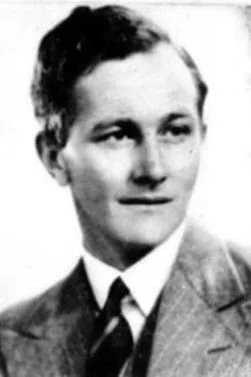
Capt Harry Rodway Rix
Captain in the Malay Regiment. Company Commander “C” Company. Cambridge educated Lawyer, Barrister at Law, (Gray’s Inn). Died at Bukit Chandu on 14th Feb 1942
February 13 brought a crescendo. Artillery and mortar fire "straddled" the Malay Regiment positions. At least five officers were killed and seven more wounded before the main Japanese offensive even began. Both battalion headquarters received direct hits. The Gap House — 1st Battalion HQ — became "a total wreck." Communication lines were shattered. And then, on the afternoon of the 13th, the Japanese tried something that speaks volumes about their desperation to take the ridge quickly: they sent men dressed as Punjabi troops marching in column of four down the road toward the Malay Regiment positions.
It was 2nd Lieutenant Abbas bin Abdul Manan who spotted the deception. The Japanese marched in fours — the British Army marched in threes. Long bursts of Lewis gun fire at close range "left about 22 Japanese lying on the ground dead or wounded," and the rest fled, according to Abbas's written statement recorded in Ramli's history.
The ruse had failed. The Japanese renewed the attack in overwhelming strength.
But clarity buys you only moments in war.
The Japanese came again. This time in overwhelming force—thousands of men, supported by artillery and tanks. The defenders were hammered relentlessly. Guns overheated. Ammunition dwindled. Men fell. And still—they held.
For nearly 48 hours, the Malay Regiment and their allies fought along the ridge, refusing to yield ground even as their numbers were cut down .
This is the part history often compresses into a sentence.But imagine it stretched out:
The heat. The noise. The screaming of shells through the air, the ear-shattering blasts, the staccato machine guns, the aircraft overhead swooping down to strafe the ridge, the smell of blood and burning flesh, the exortations of the comrades and the fierce Japanese calls of tennōheika banzai - Long Live the Emperor. The smell of cordite and earth. The knowledge that behind them lay a wall of fire and a 20 foot ditch. And finally, the realisation that there would be no reinforcement coming. Just endurance.
When Ammunition Ran Out
Eventually, the inevitable happened. The ammunition ran dry. There is a moment in battle where the logic of survival breaks. Where the question shifts from Can we win? to something quieter and more dangerous:
How do we want to be remembered?
At Pasir Panjang, the answer was clear. They fixed bayonets. And when even that failed—they fought with fists. Hand-to-hand combat broke out along the ridge. The fighting became intimate, brutal, almost primal. There are accounts of soldiers grappling, stabbing, striking—fighting not for victory, but for refusal.
Refusal to surrender.
Adnan
In the final assault on February 14, almost every officer of "C" Company was killed. Captain Harry Rix died giving orders that the position should be held to the last round. Lieutenant Stephen led a bayonet charge and was shot before he could reach the enemy. Lieutenant Adnan bin Saidi — commander of No. 7 Platoon, a young Perak-born officer from the regiment's founding cohort — manned a Lewis gun himself and "exposed himself frequently in order to encourage his men," according to the account in The Malay Regiment 1933–1947.
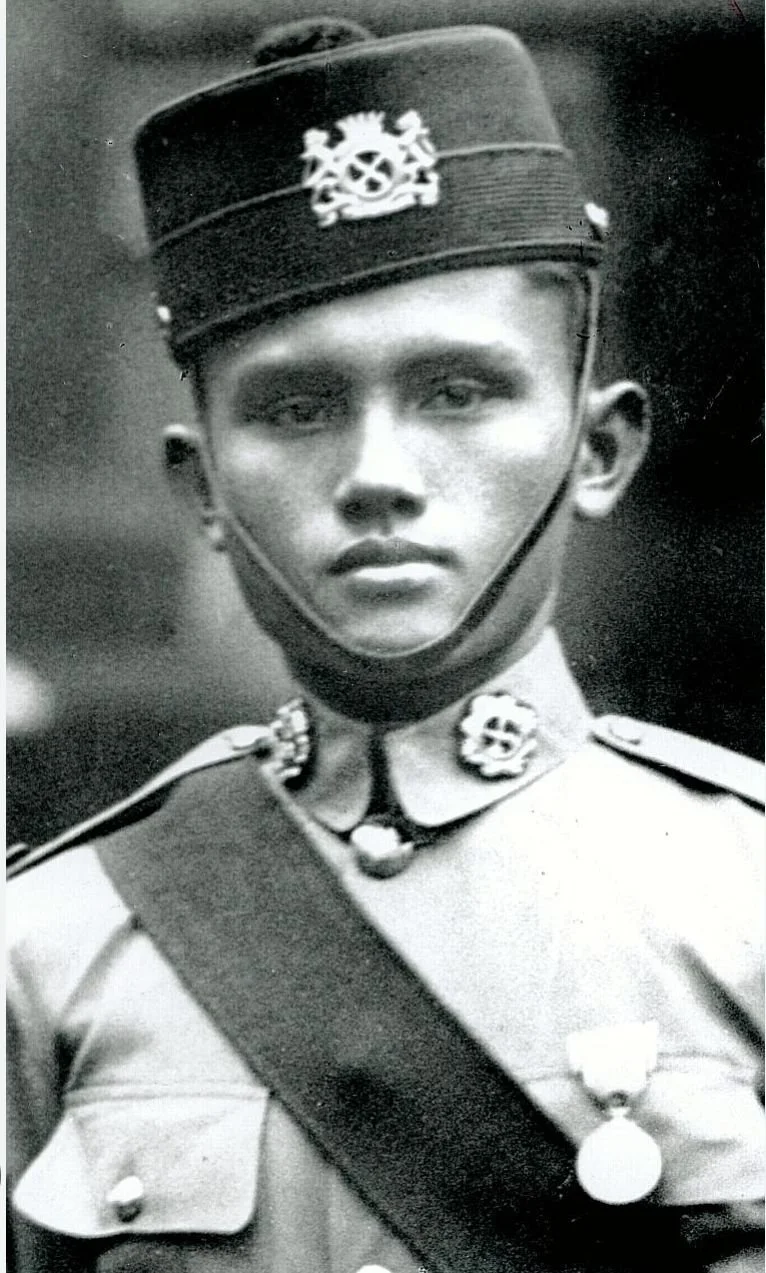
Fearless and Relentless
Lt Adnan Saidi
When his position was overrun, he was captured alive.
According to multiple eyewitness accounts preserved in Ramli's scholarship, the Japanese bayoneted Adnan and then hung his body upside down from a nearby rubber tree. No one was allowed to cut it down for burial.
The only surviving officer of "C" Company by the end was Lieutenant Abbas. He gathered his remaining men, led them through the blazing oil drain — two men fell into the burning oil and had to be dragged out — and brought three survivors back to Battalion Headquarters.
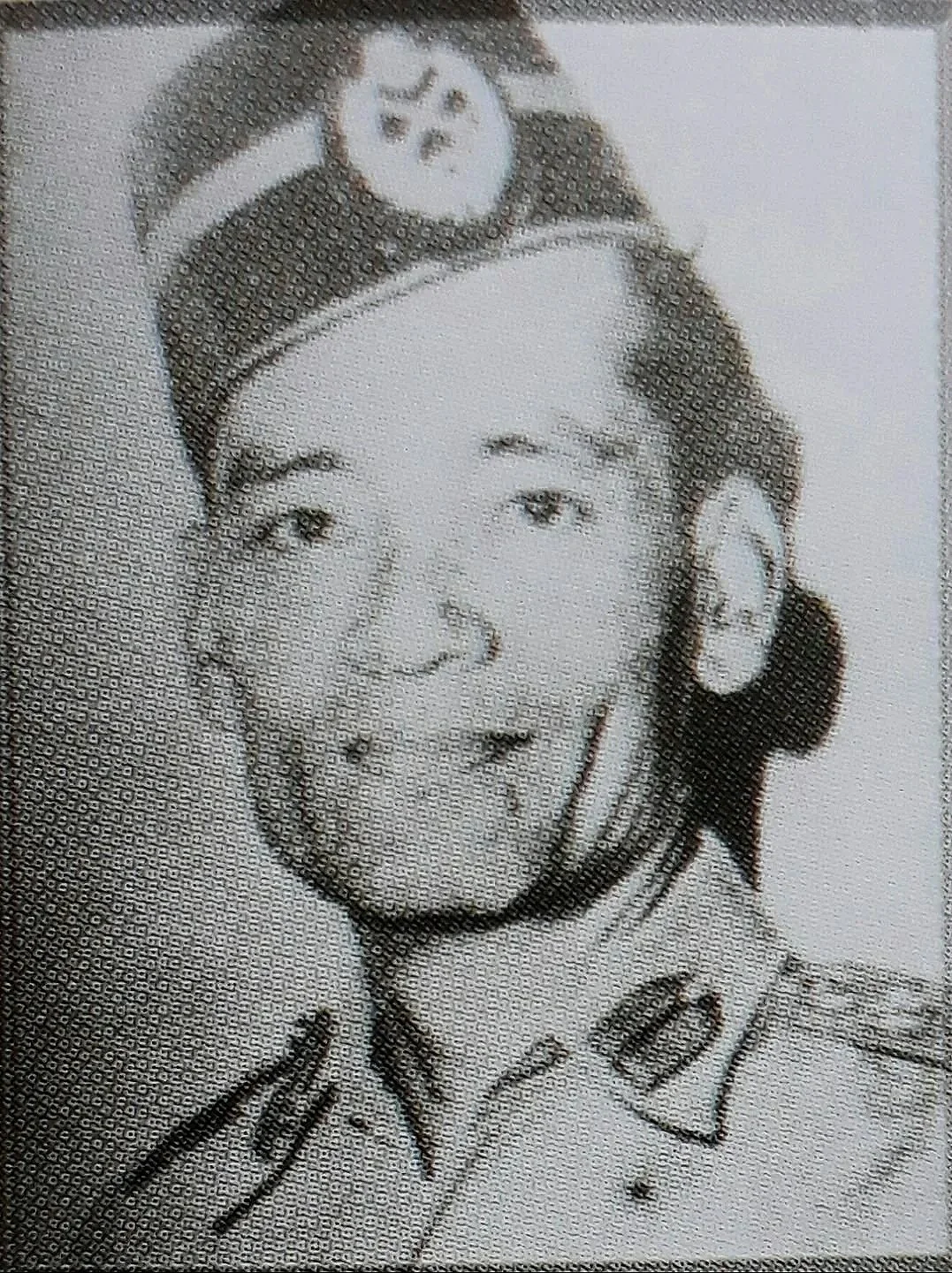
Second Lt. Abbas Manan
The hill had fallen. But the Japanese, according to Brigadier G.T. Denaro's account cited in Ramli, "would say lost half their force in the first opening of fire." Lieutenant MacKenzie of the 1st Battalion's Carrier Platoon, who arrived at the Alexander Brickworks area the next morning, found "two Malays wounded and covered in oil, remnants of 'C' Company which had been pretty well wiped out.
What Was Left
Lt.-General A.E. Percival, who commanded the Singapore garrison and signed the surrender a day later, would write of the Malay Regiment that they were not fully prepared for the ordeal they faced — but that "these young and untried soldiers acquitted themselves in a way which bore comparison with the very best troops in Malaya." He singled out Pasir Panjang Ridge specifically, calling it "an example of steadfastness and endurance which will become a great tradition in the Regiment."
Today, "Reflections at Bukit Chandu" — the WWII heritage centre at 31-K Pepys Road — stands not far from the ridge designated 226 – its height in feet above mean sea level, where all of this happened.
Return to the hill today. Stand still. Listen.
The battle is gone. The noise has faded. The smoke has long since cleared.
But something lingers. Not ghosts. Not echoes. Something subtler. A kind of moral gravity.
You may then recall the motto of the Malay Regiment - Ta'at Setia. Loyal and True.
On 14th of February 1942 they proved forever and beyond any shadow of doubt the truth of that.
